

09 Oct Catering Oven Example: Built for Real Service
A serious catering oven example is not a small backyard unit moved onto a trailer for the weekend. It is a purpose-built hearth designed to hold intense heat, recover quickly between pizzas, and create the kind of live-fire experience guests remember long after the event ends. For caterers, hospitality teams, and mobile food operators, the oven must perform under pressure while looking entirely at home in a refined setting.
A handcrafted wood-fired oven brings something a standard commercial appliance cannot replicate: visual theater, genuine firebrick cooking, and the unmistakable character of pizza baked in a live flame. The right model turns a catering station into an attraction, whether it is serving a waterfront wedding, a private estate dinner, a resort gathering, or a high-volume corporate event.
What a Catering Oven Must Handle
Catering is a different discipline from restaurant service. A restaurant oven stays in one place, follows a familiar rhythm, and works within a controlled kitchen. A catering oven may need to travel, operate outdoors, adapt to the event layout, and serve a concentrated rush of guests in a short window.
That places a premium on thermal mass, floor space, door design, and recovery time. An oven that reaches a high temperature but loses it after a few pizzas is not prepared for a busy service. Real firebrick construction stores heat in the dome and cooking floor, allowing the oven to maintain the stable radiant heat needed for crisp, evenly blistered pizza.
The visual standard matters, too. At a luxury event, equipment becomes part of the presentation. A thoughtfully finished masonry oven, with a sculptural profile, custom tile, or an engraved faceplate, supports the atmosphere rather than distracting from it. The oven should look intentional beside a polished catering setup, premium servingware, and a carefully designed venue.
Catering Oven Example for a Private Event
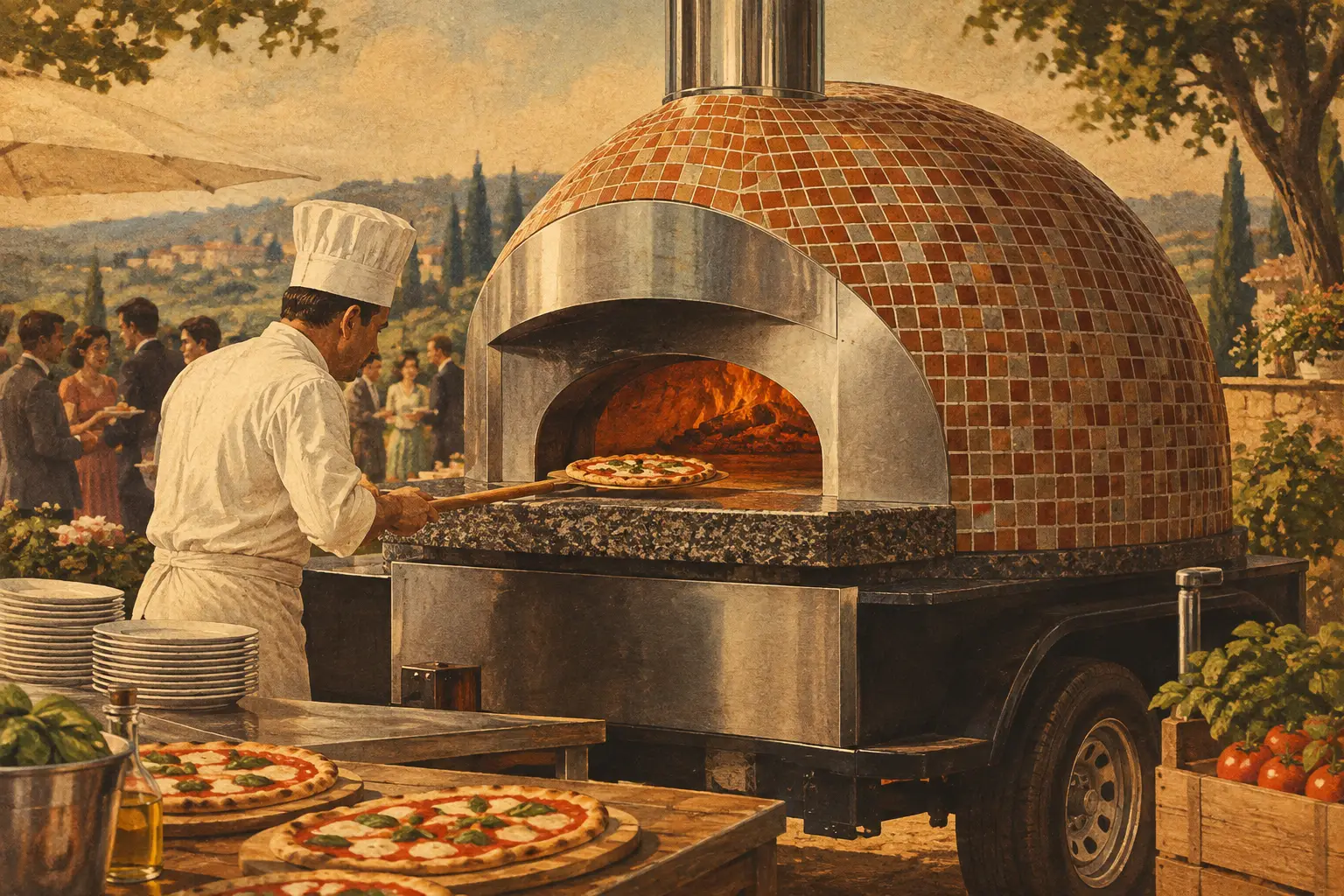
Consider a caterer serving 120 guests at an outdoor reception. Rather than attempting to deliver every pizza at the exact same moment, the team creates an open-fire pizza experience during cocktail hour and the early portion of dinner service. The menu is focused: a classic Margherita, a seasonal white pizza, and one bolder option with a carefully selected local ingredient.
A properly sized wood-fired oven is fired well before guests arrive. Once the dome has saturated with heat, the operator manages the fire to maintain a clean flame and a consistent cooking environment. One person stretches and tops dough, another tends the oven, and a third finishes, slices, and serves. This division of labor matters more than simply choosing the largest oven possible.
The oven’s cooking floor needs enough room for several pizzas at once without crowding the fire. In a high-demand moment, the operator must be able to rotate pizzas quickly, reposition them near or away from the flame, and launch the next round without losing momentum. A well-built masonry oven responds predictably. Its heat is not limited to a burner output or a thin metal chamber – it is carried by the mass of the brick itself.
For a wedding or estate event, this service model has another advantage: it feels personal. Guests see their pizza go into the fire, watch the crust rise, and receive it moments later. The caterer is not merely delivering food. They are staging a culinary moment with authentic Napoli-inspired character.
Choosing the Right Catering Oven Configuration
There is no single ideal catering oven because the right choice depends on volume, venue access, fuel preferences, and the role pizza plays in the menu. A mobile operator serving continuous pizza service needs a different configuration from a hotel that hosts occasional outdoor events.
Capacity Should Match the Service Window
Start with the most demanding part of the event, not the total guest count. If 150 guests are likely to order pizza over three hours, the workload is manageable. If those same guests expect pizza within the same 45-minute dinner period, the oven and production team must be designed for a much higher pace.
A larger cooking floor allows more pizzas to bake at once, but it also calls for more fuel, more operational skill, and a larger footprint. For operators who prioritize a compact mobile build, a medium-capacity oven may be the better business decision when paired with a tightly edited menu and disciplined service flow.
Wood-Fired or Hybrid Fuel
Wood remains the benchmark for aroma, flame, and guest appeal. It also requires an operator who understands fire management. The fire should support the bake, not overwhelm it with heavy smoke or uneven heat. Dry, appropriate firewood and a properly heated dome are fundamental to clean results.
A hybrid wood-and-gas configuration can be compelling for some commercial applications. Gas offers consistency and a practical backup when an event schedule leaves little margin for error, while wood can still provide the visual appeal and live-fire personality guests expect. The trade-off is simple: a hybrid system adds versatility, but an operator should still understand the principles of masonry heat and pizza baking.
Mobile, Built-In, or Venue-Based
A catering oven example may be mounted for mobile service, integrated into a permanent hospitality terrace, or installed within an outdoor kitchen at a private property. Each option changes the planning process.
A mobile installation requires attention to weight distribution, weather protection, ventilation, safe loading procedures, and access at the venue. A permanent installation can make a stronger architectural statement and may accommodate a larger oven, but it needs thoughtful placement in relation to seating, prep space, utility connections, and local building requirements.
For luxury properties, an outdoor oven can serve both roles. It becomes the centerpiece for family entertaining and a capable asset when a private chef or caterer is brought in for larger gatherings.
Why Real Firebrick Changes Catering Performance
A thin-walled oven can heat quickly, but fast heating alone does not equal professional output. Catering exposes weaknesses quickly. Repeated door openings, continuous launches, and changing weather conditions all pull heat from the chamber.
Handcrafted firebrick construction provides the thermal stability that busy service demands. The floor remains hot enough to crisp the base while the dome radiates heat over the toppings. This balance is what allows a pizza to bake rapidly without leaving the center underdone or the rim scorched beyond recognition.
Firebrick also supports versatility beyond pizza. A caterer can use retained heat for flatbreads, roasted vegetables, seafood, cast-iron dishes, or slow-cooked preparations as the oven temperature gradually declines. That flexibility can broaden a menu without adding another major cooking appliance to the event footprint.
The difference is felt at the end of a long service. A masonry oven built with substantial materials is designed to keep working when a lightweight unit begins to struggle.
The Service Setup Around the Oven Matters
Even the finest oven cannot compensate for a poor station layout. Catering success is built around movement: dough from refrigeration to the bench, toppings within reach, pizzas to the oven, and finished pies to the guest without unnecessary crossings.
The prep area should be protected from direct sun and wind whenever possible. Dough is sensitive to heat, humidity, and handling time, especially in Florida’s demanding outdoor conditions. Ingredients need to be organized in shallow pans, replenished frequently, and kept cold without turning the service counter into clutter.
The oven operator needs clear working space and a safe path for wood, peels, and ash management. Guests naturally gather around an open fire, so the front of the oven should feel inviting while remaining controlled. A beautiful oven earns attention. The catering plan should account for it.
A Premium Oven Is Part of the Brand Experience
For a caterer, the oven is more than equipment. It communicates standards before the first pizza is served. A handcrafted, architectural-grade oven suggests that the business has invested in flavor, presentation, and permanence. It tells guests that this is not an improvised food station.
That is why customization has real commercial value. Tile color, finish, facade detailing, and the overall form of the oven can be aligned with a hospitality brand, event aesthetic, or luxury property. The goal is not decoration for its own sake. It is a cohesive visual experience that makes the food feel even more considered.
Forno Nardona builds ovens for owners who understand that authentic performance and exceptional design belong together. In catering, that combination creates an advantage guests can see, smell, and taste.
A well-chosen catering oven should make a demanding service feel composed. When the fire is clean, the brick is fully heated, and the station is planned with care, every pizza arriving from the oven carries the confidence of a true live-fire kitchen.
Sorry, the comment form is closed at this time.