

10 May Choosing an Authentic Neapolitan Pizza Oven
The difference shows up in the first 90 seconds. An authentic neapolitan pizza oven is not simply a hot box for baking dough. It is a carefully built thermal system designed to reach the extreme temperatures, live-fire balance, and floor performance that true Neapolitan pizza demands. When the oven is right, the crust rises fast, the leopard spotting develops naturally, and the center stays tender instead of drying out.
For homeowners building a serious outdoor kitchen and for commercial buyers whose reputation depends on every pie, that distinction matters. Many ovens are marketed as pizza ovens. Far fewer are built with the masonry depth, heat retention, and visual presence required to deliver authentic Napoli-inspired results day after day.
What makes an authentic neapolitan pizza oven
At its core, authenticity comes down to how the oven stores and manages heat. Traditional Neapolitan pizza is baked at very high temperatures, often in the range of 800 to 900 degrees Fahrenheit, with the pie cooking in roughly 60 to 90 seconds. That kind of performance is not created by branding language or thin decorative materials. It comes from real firebrick, proper insulation, and a dome engineered to circulate heat across the cooking chamber.
A genuine masonry oven does three jobs at once. The live fire produces radiant heat from the flame. The hot dome reflects that heat back down onto the pizza. The brick floor delivers conductive heat into the base of the dough. If any one of those elements is weak, the bake suffers. You may get color without lift, melted cheese without proper crust structure, or a bottom that burns before the top finishes.
This is why build quality matters so much more than surface appearance. A steel shell can look attractive. A prefabricated unit can promise convenience. But if the oven lacks substantial thermal mass and proper refractory materials, it will not behave like a true Neapolitan oven once the fire is lit and service begins.
Real firebrick vs lighter-built ovens
The biggest dividing line in the market is often hidden beneath the finish. An authentic neapolitan pizza oven should be constructed around refractory materials with enough mass to absorb, retain, and steadily release heat. Real firebrick is central to that experience.
Firebrick creates stability. It gives the oven the ability to recover after multiple pizzas, hold temperature over longer cooking sessions, and support more than a single style of cooking. That matters in a luxury residential setting where an evening may begin with pizza and continue with roasting, baking, or cast-iron cooking. It matters even more in a commercial setting where consistency is non-negotiable.
Lighter ovens can heat up quickly, which sounds appealing on paper. The trade-off is usually shorter heat retention and less forgiving performance. For occasional convenience cooking, that may be enough. For clients who want authentic results and a permanent culinary centerpiece, it usually is not.
A premium oven should feel substantial because it is substantial. The weight, the masonry depth, and the insulation package are not drawbacks. They are the reason the oven performs like a true brick oven instead of a decorative appliance.
Why dome geometry matters more than most buyers realize
The shape of the dome is not just a visual cue borrowed from old-world ovens. It plays a direct role in how heat moves. A well-proportioned dome encourages flame roll, even heat reflection, and strong top-down cooking. That is what helps create the quick rise, blistered cornicione, and balanced finish associated with classic Neapolitan pizza.
Poorly designed chambers tend to create hot spots and uneven bakes. You end up rotating constantly, compensating for weak areas, or chasing temperatures that fluctuate too much during service. In a home setting, that becomes frustrating. In a restaurant, it becomes expensive.
This is one reason handcrafted ovens continue to command respect at the high end of the market. When an oven is built by specialists who understand traditional firing behavior, the dimensions are not arbitrary. They are chosen to support how the oven cooks, not just how it photographs.
Wood-fired, gas, or hybrid
Fuel choice is one of the most practical decisions, and the right answer depends on how the oven will be used. For purists, wood-fired cooking remains the benchmark. It delivers the live flame, aroma, and theater that many buyers want, especially in a statement outdoor kitchen or hospitality environment.
Gas offers cleaner operation, easier startup, and greater day-to-day convenience. For some commercial operators, that consistency is a major advantage. For some homeowners, especially those who entertain often, gas reduces the effort required to get exceptional results on a busy evening.
Hybrid configurations deserve serious consideration because they solve a real-world problem. They preserve the character of live-fire cooking while adding flexibility when time, staffing, or weather conditions make gas support valuable. The trade-off is cost and complexity. A hybrid oven is typically a more sophisticated investment, but for the right buyer it can be the most versatile choice.
The key is not choosing the fuel that sounds most romantic. It is choosing the fuel system that matches your cooking habits, entertaining style, and performance expectations.
The oven should match the architecture
At the luxury level, performance alone is not enough. The oven must also belong in the space. A true custom oven should feel integrated with the home, patio, pool deck, rooftop, or commercial concept around it. It should function as both a culinary tool and an architectural focal point.
This is where premium buyers often separate from the mass market. They are not looking for a temporary appliance that can be tucked into a corner. They want a permanent installation with material presence, visual balance, and finish options that complement the broader design language of the property.
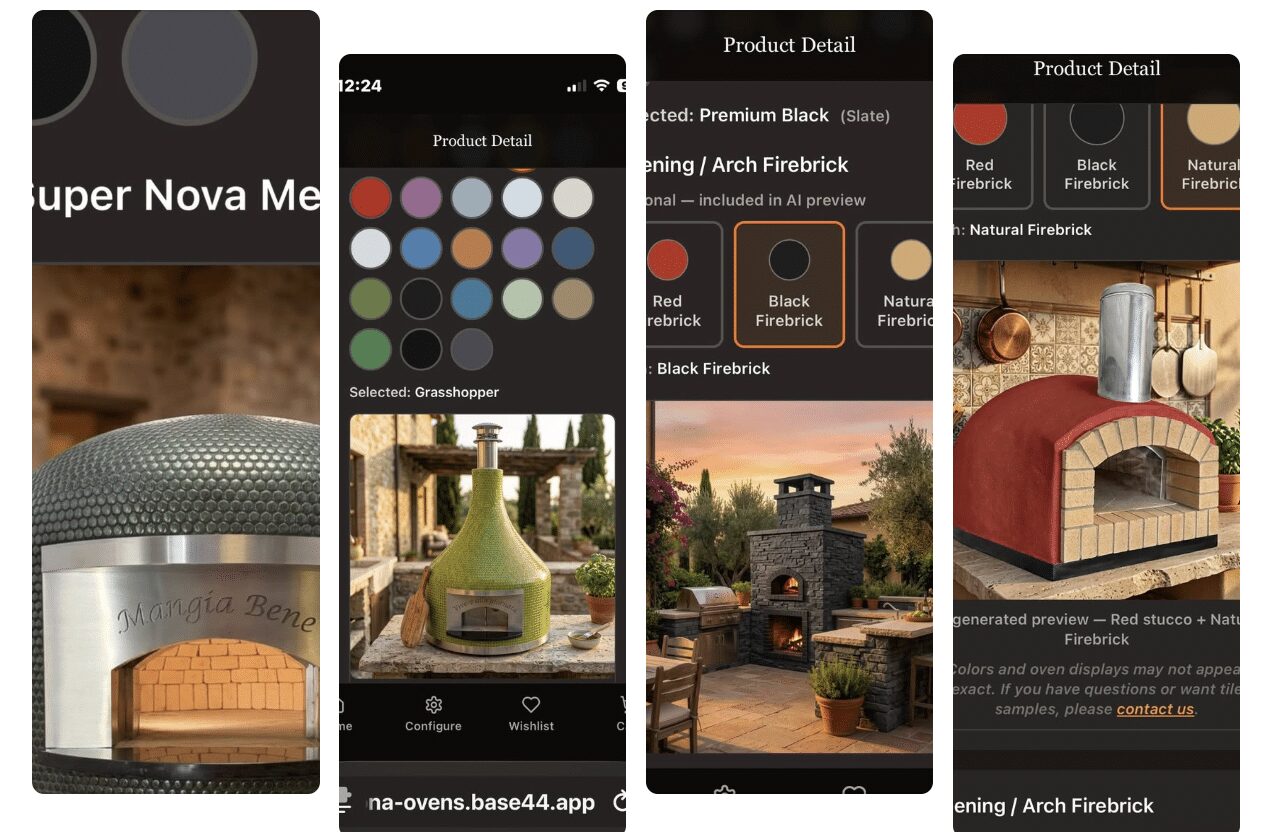
Custom tile, refined masonry detailing, engraved accents, and thoughtfully proportioned facades all contribute to that effect. The right oven does more than produce excellent pizza. It elevates the entire entertaining environment.
For Florida homeowners in particular, design and durability go hand in hand. Heat, humidity, salt air, and exposure demand materials that are not only beautiful but built for long-term outdoor performance. An oven in this climate should be made to last, not merely made to sell.
Residential and commercial buyers need different things
A homeowner may prioritize aesthetics, entertaining flow, and flexible cooking. A restaurant owner may care more about throughput, heat recovery, and kitchen integration. Both are valid, but they lead to different specifications.
In a residential setting, oven size should reflect how people actually entertain. Bigger is not always better. An oversized oven can require more fuel and more preheating than a family needs. On the other hand, if the oven is expected to anchor large gatherings, weekend parties, or a full outdoor kitchen, undersizing it can become a constant limitation.
Commercial buyers need to think about menu volume, production rhythm, installation requirements, and service environment. A food truck has different constraints than a coastal restaurant or a luxury hotel terrace. This is where built-to-order manufacturing becomes valuable. It allows the oven to serve the concept instead of forcing the concept to adapt to the oven.
A premium oven is an investment, not a shortcut
Price matters, but it should be viewed in the right frame. A handcrafted masonry oven costs more because it contains more – more material, more labor, more thermal capability, and more permanence. That higher entry point buys performance, durability, and visual impact that lighter-produced alternatives rarely match over time.
For affluent homeowners, the value is often tied to lifestyle. A well-designed oven transforms an outdoor area into a destination. It creates a reason to gather, cook, and host in a way that feels elevated and memorable. For commercial operators, the return can be even more direct. Better product quality, stronger presentation, and authentic brick-oven credibility can all support pricing power and customer appeal.
That said, not every buyer needs the same level of oven. If your goal is occasional convenience cooking, a lower-mass unit may be enough. If your goal is authentic performance and a statement installation that will hold its place for years, a true masonry oven is the more appropriate choice.
Forno Nardona serves clients who understand that difference. They are not shopping for the cheapest path to pizza. They are choosing a handcrafted centerpiece built to perform with authority and to look exceptional doing it.
The best oven is the one that respects both the tradition of Neapolitan cooking and the standards of the space it lives in. Choose the one that will still feel right after the novelty wears off and the fire becomes part of how you live.