

16 Jul Commercial vs Residential Pizza Oven
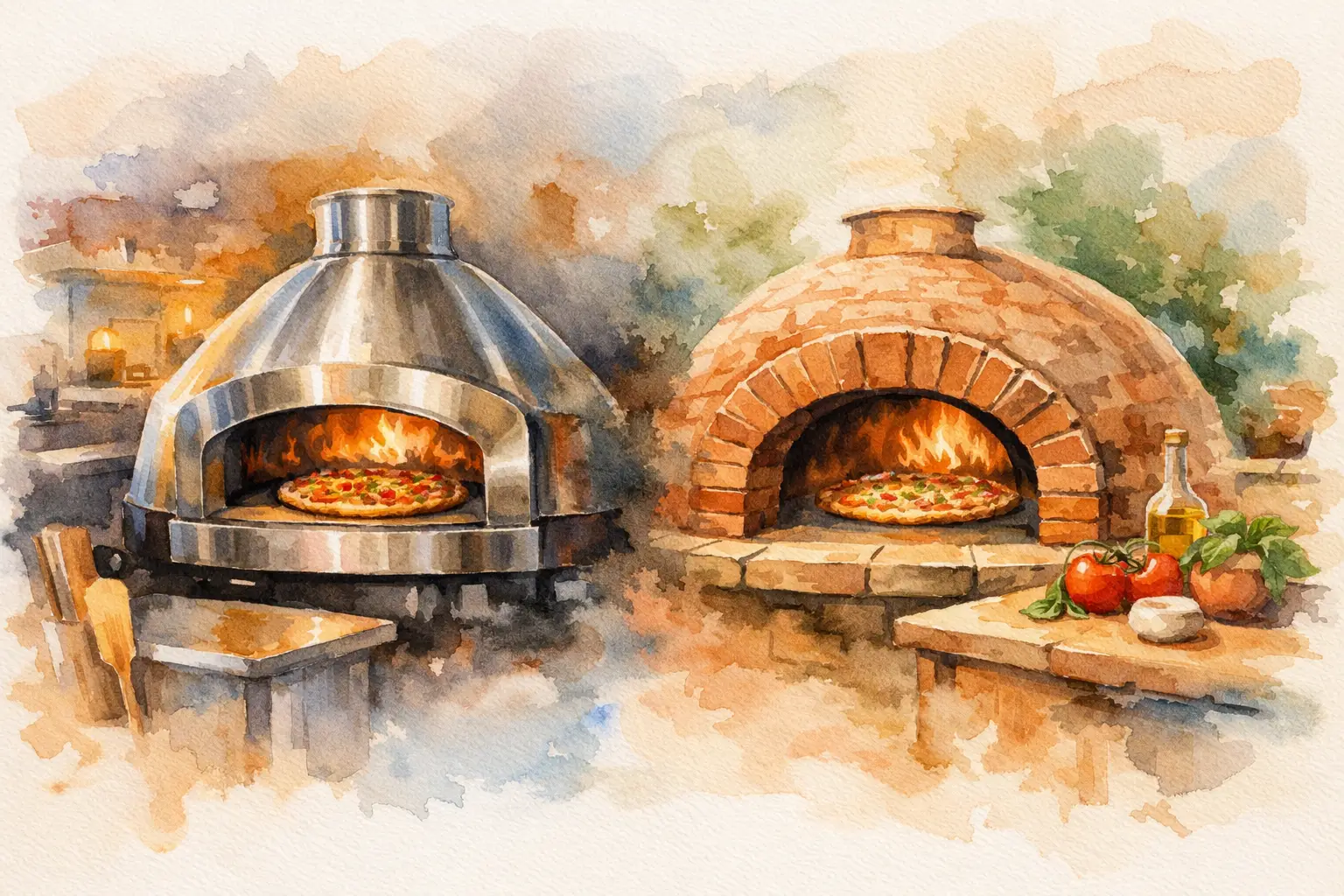
A pizza oven can look equally striking on a pool deck or in an open kitchen, but the decision between a commercial vs residential pizza oven changes everything behind the façade. Heat recovery, floor space, venting, service flow, code requirements, and even the way the oven supports your brand or home all shift depending on where and how it will be used. This is not simply a matter of size. It is a question of performance expectations, installation realities, and long-term value.
For buyers investing at a premium level, that distinction matters even more. A true masonry oven built from real firebrick is designed to hold heat, cook with authority, and become a permanent architectural feature. But the right specification for a private outdoor kitchen in Miami is not always the right specification for a restaurant, hotel, catering operation, or food truck in Tampa. The better choice depends on volume, pace, fuel preference, and the kind of experience you want the oven to create.
Commercial vs residential pizza oven: the real difference
The simplest way to frame commercial vs residential pizza oven selection is this: residential ovens are built around lifestyle, entertaining, and personal cooking rhythm, while commercial ovens are built around output, consistency, and operational demand.
A residential oven typically serves families, guests, and special occasions. It may need to cook a few pizzas back-to-back, roast meats, bake bread, and anchor an outdoor living space with visual presence. Performance still matters deeply, especially for buyers who care about authentic Neapolitan-style results, but the cooking cycle is more flexible. You can take your time. The oven becomes part of the experience.
A commercial oven has a different job. It must recover heat quickly, maintain a stable cooking environment through repeated service, and stand up to prolonged use. In a restaurant or hospitality setting, the oven is not only a cooking tool but also part of the business model. If it cannot support ticket volume, labor flow, and menu consistency, it becomes a bottleneck rather than an asset.
That is why a commercial oven is not merely a larger residential oven, and a residential oven should not be selected as though it were expected to perform under restaurant pressure.
Output changes the entire buying decision
Most oven buyers start by asking how many pizzas fit inside. That matters, but capacity on paper can be misleading. What matters more is service rhythm.
In a residential setting, even a serious entertainer rarely runs the oven at nonstop restaurant pace for hours at a time. A well-built wood-fired oven with substantial brick mass can comfortably handle multiple pizzas in sequence, followed by roasting or baking as the heat settles. This versatility is part of the appeal. You are not just buying a pizza machine. You are investing in a cooking environment.
Commercial settings demand tighter margins for error. A Friday night restaurant rush, a hotel event, or a food truck lunch service requires reliable turnover. The oven floor must support repeated loading. The dome and hearth must retain and rebound heat efficiently. Access height, mouth opening, and interior dimensions must support the movement of trained staff working quickly and safely.
For that reason, commercial buyers should think less about occasional peak performance and more about sustained performance. If the oven will be central to revenue, undersizing it is an expensive mistake.
Heat retention and recovery are where craftsmanship shows
This is where premium construction separates itself from lighter, appliance-style units. Real firebrick and proper insulation create thermal stability. That stability is valuable in any setting, but it becomes critical under commercial use.
In a residential oven, excellent heat retention means better cooking results with less fuss. You can fire the oven, cook several rounds of pizza, then continue with vegetables, seafood, or a slow roast. The heat works for you over time.
In a commercial oven, thermal mass must do more than create beautiful char and balanced bake. It must help the oven stay dependable under pressure. The more often the door opens, the more pizzas rotate through, and the longer service runs, the more obvious build quality becomes. Thin materials lose composure quickly. Proper masonry does not.
Installation is not a footnote
Many buyers fall in love with the oven first and think through installation second. With a premium pizza oven, that order should be reversed.
Residential installations usually offer more design freedom, especially in outdoor kitchens, patios, covered lanais, and estate-style entertaining spaces. The oven can be integrated into a broader composition with counters, grills, refrigeration, and custom finishes. In luxury homes, aesthetics matter as much as culinary function. The oven should feel built into the architecture, not dropped into the space as an afterthought.
Commercial installation is more technical. Indoor restaurant projects may require specific venting systems, floor load considerations, clearance planning, and local code review. Hospitality groups often need an oven that performs beautifully while also fitting into operational and permitting realities. Food trucks add another layer, since weight, space efficiency, and fuel configuration all influence feasibility.
This is one reason custom-built solutions have an advantage. A thoughtfully specified oven can be matched to the actual site, not forced into it.
Fuel choice depends on how you cook and how you serve
Wood remains the gold standard for buyers who want live-fire character, visual theater, and traditional craft. It brings aroma, ritual, and a presence that no ordinary appliance can replicate. In residential settings, that sensory experience is often a major reason for the purchase.
Commercial environments may still favor wood for authenticity and customer appeal, especially in open-kitchen restaurants or hospitality venues where the flame is part of the story. But commercial operators also need to think about labor, pace, and consistency. In some cases, a hybrid wood-and-gas configuration makes more sense. It preserves the character of real-fire cooking while adding practical control during busy service.
There is no universal winner here. A private client designing a luxury outdoor kitchen may gladly prioritize tradition and ceremony. A restaurant owner may need a setup that balances authenticity with operational efficiency. The right answer depends on what the oven has to do every day, not just what looks good in the showroom.
Design matters more than most buyers expect
With a residential oven, design is central to value. The oven often becomes the visual anchor of the entire outdoor kitchen or entertaining area. Shape, finish, tile color, face details, and surrounding materials all affect whether the final result feels elevated or ordinary. At the luxury end of the market, buyers are not looking for a generic dome. They want a statement piece with permanent presence.
Commercial buyers should not dismiss aesthetics either. An oven can be part of a restaurant’s identity, especially when guests can see it. A handcrafted masonry oven signals seriousness. It suggests tradition, authenticity, and care before the first pizza reaches the table. In hospitality environments, that visual credibility has real business value.
This is where artisan production stands apart from mass-market alternatives. A built-to-order oven can support both performance and presentation, rather than forcing one to compromise for the other.
Which buyer should choose which oven?
If you are a homeowner, the best residential oven is one that fits your entertaining style, your space, and your ambition as a cook. That may mean prioritizing an oven large enough for frequent gatherings, choosing finishes that complement the architecture, or selecting a hybrid fuel setup for convenience. The goal is a luxurious cooking experience that feels effortless to live with and impressive to share.
If you are a restaurant operator, caterer, hotel group, or mobile food business, the best commercial oven is the one that supports service volume, workflow, and long-term durability without sacrificing the food quality your concept depends on. That usually means thinking harder about output, recovery, venting, and operator access than about surface-level features.
Some buyers sit between categories. A luxury homeowner who hosts large events may need residential design with near-commercial performance. A boutique hospitality venue may need commercial capability with a refined visual finish. Those edge cases are exactly why custom specification matters.
Forno Nardona works in that space where performance, masonry craftsmanship, and architectural presence need to coexist. That is often the difference between buying an oven and commissioning one.
The smarter question is not bigger or better
When comparing a commercial vs residential pizza oven, the smartest question is not which one is bigger, more expensive, or more impressive. It is which one is truly matched to the way you will use it five years from now.
A well-chosen residential oven turns a backyard into a destination and rewards every gathering with real-fire cooking that feels timeless. A properly specified commercial oven can elevate a menu, strengthen a brand, and carry service with confidence night after night. The common thread is this: when the oven is built with authentic materials and selected with care, it stops being a purchase and starts becoming part of the place itself.
If you are weighing the decision seriously, choose the oven that respects both the fire and the setting it will serve.
Sorry, the comment form is closed at this time.