



18 Nov Premium Outdoor Kitchen Features Worth Building In
A luxury outdoor kitchen should not feel like an indoor kitchen moved onto a patio. The most compelling premium outdoor kitchen features are planned around the way people actually gather: guests leaning near the fire, a host finishing a pizza without leaving the conversation, and a space that looks as considered at noon as it does under evening light.
For homeowners investing in a permanent outdoor living environment, the difference is found in materials, layout, heat performance, and architectural intent. A quality grill is useful. A fully integrated kitchen centered on a handcrafted wood-fired oven becomes a destination.
Start With a True Cooking Centerpiece
The oven often determines whether an outdoor kitchen feels ordinary or unmistakable. A real wood-fired pizza oven creates more than high heat. It introduces movement, aroma, and theater to the experience of cooking outdoors. Guests can see the fire, hear the crackle of wood, and watch a pizza bake in moments beneath a live flame.
That experience depends on construction. Premium ovens are built with real firebrick and substantial insulating materials that absorb heat, retain it, and release it evenly across the cooking floor. Thin metal units may preheat quickly, but they do not offer the same thermal mass, cooking consistency, or enduring masonry presence. A properly built brick oven holds enough heat to cook pizza, roast meats, bake bread, and finish vegetables well after the flame has settled.
A wood-and-gas hybrid configuration can be the right choice for homeowners who want the flavor and visual appeal of a live wood fire with an additional option for convenient ignition and temperature management. The best fuel choice depends on how the kitchen will be used. A dedicated wood-fired oven is ideal for enthusiasts who value tradition, while hybrid capability can make frequent weeknight use more practical.
Premium Outdoor Kitchen Features Begin With Layout
An exceptional kitchen is not defined by how many appliances can fit along one wall. It is defined by whether the cooking sequence works. There should be a natural path from refrigeration and prep space to the grill or oven, then to plating and serving. If the cook must cross behind seated guests or carry hot cookware across an open walkway, the design has missed the point.
Plan for generous counter space on both sides of the oven. Pizza making requires room for dough, toppings, peels, finished pies, and the occasional tray of roasted vegetables. Stone or porcelain countertops with dependable heat and weather resistance are often better suited to this work than surfaces selected solely for appearance.
A dedicated landing area beside the grill matters just as much. It gives the cook a safe place for tools and platters while reducing clutter around active burners. In a larger kitchen, an island can create a natural serving zone and allow guests to participate without standing directly in the work path.
Design Around Real Entertaining Habits
A kitchen designed for two people cooking dinner has different requirements than one built for extended family celebrations or hosted events. Consider the number of people likely to gather, whether food will be served buffet-style, and how often the space will be used after dark.
For a Florida property, shade, airflow, drainage, and sun exposure deserve particular attention. An oven and grill should be placed where prevailing breezes will not push smoke toward seating areas or into the home. Covered structures can add comfort, but they also require careful planning for clearances, ventilation, and noncombustible materials around a live-fire appliance.
Choose Appliances That Earn Their Place
Built-in grills, refrigeration, ice makers, storage drawers, and sinks can all elevate an outdoor kitchen when chosen with intention. The key is selecting components that support the menu and the host’s routine rather than filling cabinetry with features that rarely get used.
A premium built-in grill offers controlled, high-output cooking for steaks, seafood, and larger meals, complementing the high-heat character of a pizza oven. Together, the two appliances make the kitchen far more versatile. The oven becomes the focal point for pizza nights and slow-roasted dishes, while the grill handles direct heat and larger-format outdoor cooking.
Outdoor-rated refrigeration keeps ingredients close at hand and limits trips inside. Deep drawers organize tools, pans, wood, and serving pieces without exposing them to weather. A sink is especially valuable when the outdoor kitchen is intended to function independently during an event, although it adds plumbing requirements that should be addressed early in the design process.
Do not overlook ventilation and utility access. Gas lines, electrical service, water, drainage, and appliance clearances are easiest to resolve before cabinetry and finishes are installed. Retrofitting these essentials after the fact can compromise both the clean appearance and the long-term performance of the kitchen.
Use Materials With Architectural Weight
Luxury outdoor kitchens deserve materials that become more handsome with use, not materials that show their age after one hard season. Masonry, natural stone, stucco, porcelain, stainless steel, and thoughtfully selected tile each serve a different purpose. The strongest designs use them in a coordinated way rather than competing for attention.
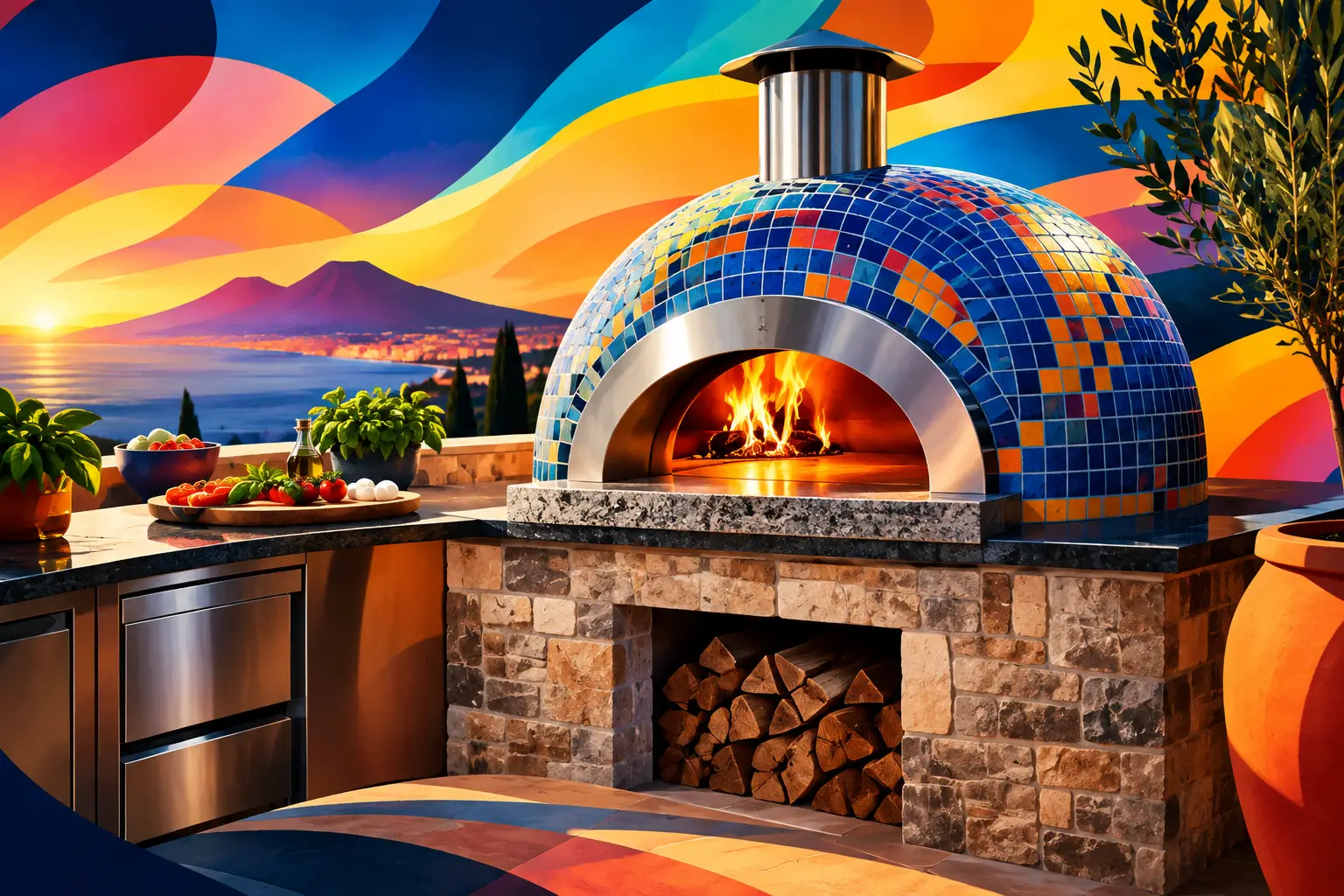
A hand-finished oven facade can anchor the entire composition. Tile color, brick detailing, engraved faceplates, and the shape of the oven opening can be tailored to reflect the architecture of the residence, whether that means coastal contemporary, Mediterranean, transitional, or a more traditional estate setting. Customization should not be decoration added at the end. It should make the oven feel native to the property.
Cabinet construction also deserves scrutiny. Outdoor cabinetry must withstand moisture, heat, salt air in coastal locations, and repeated use. Quality hardware, durable frames, and cleanly finished edges make a visible difference over time. The same is true of countertop support and masonry foundations. Beautiful surfaces cannot compensate for an unstable base.
Build for Fire, Weather, and Longevity
A premium outdoor kitchen is a substantial construction project, not a collection of freestanding appliances. Foundation requirements, site access, structural support, local codes, and fire clearances all influence what can be built and where. An oversized masonry oven, for example, requires a properly engineered support structure. That weight is part of its performance advantage, but it cannot be treated as an afterthought.
Weather protection should be balanced against the open-air quality that makes outdoor cooking appealing. Pergolas, roof structures, vent hoods, and strategic overhangs can improve comfort and protect finishes. However, enclosing a cooking area too tightly can create heat and smoke concerns. A skilled design team evaluates the oven, grill, roofline, and seating plan as one system.
Lighting is another feature that separates a polished outdoor kitchen from a patio with appliances. Task lighting should clearly illuminate prep counters and cooking surfaces, while softer ambient lighting gives the dining area warmth without competing with the fire. Under-counter lighting, carefully placed sconces, and landscape lighting can extend the usefulness of the space long after sunset.
Make the Kitchen Feel Personal, Not Overbuilt
More equipment does not automatically create more luxury. In some homes, a modestly scaled oven, a serious grill, ample prep space, and beautifully finished storage will feel more refined than an oversized installation packed with redundant appliances. The right scale protects sightlines, preserves circulation, and gives the architecture room to breathe.
This is where a custom approach matters. At Forno Nardona, the goal is not simply to place an oven in an outdoor kitchen. It is to create a permanent culinary centerpiece built from real firebrick, designed around the property, and made for the kind of gatherings the owner wants to host.
The most rewarding outdoor kitchens invite people to stay longer. Begin with the fire, make room for the cook, choose materials that belong to the home, and let every feature support an experience worth repeating.
No Comments