



23 Oct How to Protect Ovens From Coastal Weather
A wood-fired oven beside the water can be one of the most memorable features of a coastal home. It can also face conditions that inland outdoor kitchens rarely encounter: salt carried on the breeze, wind-driven rain, persistent humidity, intense sun, and sudden temperature changes. Knowing how to protect ovens from coastal weather is not about hiding a beautiful masonry centerpiece. It is about specifying the right materials, building the right enclosure, and maintaining the oven with the same care you would give any architectural investment.
A properly built brick oven is made for serious heat, but its exterior finish, metal components, chimney system, and supporting kitchen deserve a protection plan. In Florida and other coastal regions, that plan begins before installation.
Start With a Coastal-Smart Oven Location
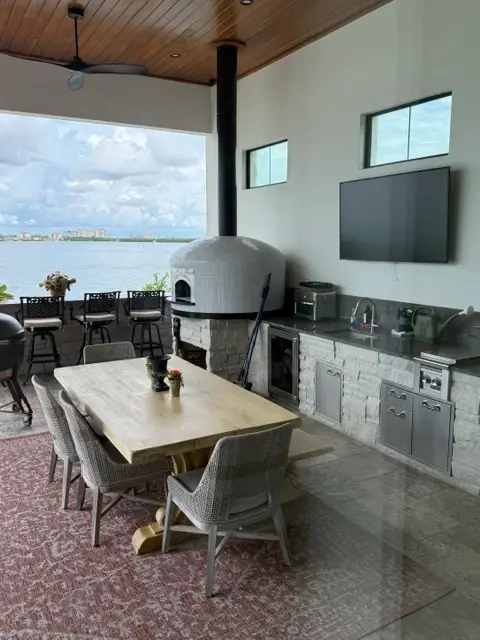
The best defense against coastal exposure is thoughtful placement. An oven installed in the open, directly facing prevailing winds, will receive far more salt spray and rain than one placed under a covered lanai, pavilion, or purpose-built outdoor kitchen roof. Even a few feet of protection can dramatically reduce weather exposure.
Look at the site through the seasons, not just on a calm installation day. Consider where wind pushes rain during summer storms, where salt air enters from the shoreline, and where water naturally collects after a downpour. The oven should sit on a stable, elevated base with proper drainage around it. Standing water near the foundation is never acceptable, particularly where masonry and finished flooring meet.
A covered structure is often the most valuable upgrade for a luxury outdoor oven. It protects the oven face and finish while making the cooking area more enjoyable year-round. The roof must still allow for a properly designed chimney system, correct clearances, and safe ventilation. A beautiful enclosure should never compromise fire safety or draft performance.
Choose Materials That Belong Near Salt Air
Coastal weather does not damage every oven component in the same way. The real firebrick chamber of a quality masonry oven is built to withstand exceptional thermal stress. The vulnerable areas are more often the exterior details: decorative tile, rendered finishes, fasteners, doors, chimney caps, counters, cabinetry, and appliances installed around the oven.
For a coastal kitchen, material selection should favor corrosion resistance and long-term serviceability. Marine-grade or high-quality stainless steel is a wiser choice for exposed hardware, doors, and adjacent cooking equipment than ordinary painted metal. Powder-coated finishes can perform well, but they still need regular cleaning because salt residue can settle into seams, edges, and mounting points.
Tile deserves equal consideration. A handcrafted oven can become a focal point through custom color, glazed tile, and an engraved faceplate, but the finish must be suitable for exterior use and installed with materials rated for the local climate. Coastal sunlight is unforgiving. Choose finishes that resist fading and avoid designs that rely on delicate exterior coatings in fully exposed locations.
Natural stone counters add permanence, but they need the correct sealer and routine care. Porous stone can absorb moisture and stains, while salt deposits may dull the surface over time. Dense stone, properly sealed concrete, and premium outdoor-rated porcelain are often better suited to a working coastal kitchen than materials selected for appearance alone.
Keep Water Out of the Masonry
Moisture is the central enemy of any outdoor oven, especially when an oven is left unused through a rainy stretch. Masonry can absorb water through unfinished joints, hairline cracks, unprotected insulation layers, and poorly sealed transitions around the chimney or decorative finish. Once moisture enters, repeated heating can force it back out as steam. In severe cases, this can cause cracking or surface spalling.
A professionally built oven should include a weather-conscious exterior assembly, but maintenance still matters. Inspect the dome finish, oven landing, chimney penetration, and base at least twice each year. In storm-prone coastal areas, inspect again after a major weather event. Small cracks are not automatically structural failures, yet they should not be ignored. Early repair is simpler, cleaner, and more protective than allowing water to find a path deeper into the assembly.
Pay special attention to the chimney transition. This is one of the most exposed points on the oven, where heat, rain, and movement meet. Flashing, collars, caps, and sealants should be selected for outdoor use and checked for loosening, corrosion, or gaps. A chimney cap also helps keep direct rain and nesting debris out of the flue, provided it does not restrict smoke flow.
Use a Cover Correctly, Not Constantly
A fitted cover is useful protection for an outdoor oven, but it is not a substitute for a well-built enclosure. The right cover shields the finish from sun, blowing rain, pollen, and salt-laden debris while the oven is cool and not in use. It should fit securely without trapping water in folds or rubbing abrasive fabric against decorative surfaces.
Breathability matters in humid climates. A fully impermeable cover can hold condensation against the oven, especially after rain or during long periods of warm, damp weather. Choose a cover designed to shed water while allowing moisture vapor to escape. Remove it periodically on dry days so the exterior can air out.
Never cover an oven that is warm, and never attempt to seal an oven so tightly that normal ventilation is blocked. After cooking, let the oven cool completely. Leave the door position appropriate to the manufacturer’s operating guidance so residual moisture can escape rather than condense inside the chamber.
Clean Salt Residue Before It Becomes Corrosion
Salt does not need visible sea spray to cause problems. In many coastal neighborhoods, fine airborne salt settles quietly on metal, tile, stone, and painted surfaces. Humidity activates that residue, creating the conditions for corrosion and staining.
A gentle fresh-water rinse of exposed exterior surfaces is one of the simplest ways to protect a coastal oven. The frequency depends on proximity to the water and prevailing winds. Homes directly on the coast may benefit from a light rinse every few weeks, while more sheltered properties can often follow a monthly schedule. Dry metal components afterward with a soft cloth rather than allowing mineral-rich water to sit in seams.
Avoid harsh acids, abrasive pads, and aggressive pressure washing on masonry finishes, grout, decorative tile, or oven insulation areas. These methods can damage sealers and force water into places it does not belong. Use mild, exterior-safe cleaners only when needed, and treat stainless surfaces in the direction of the grain.
Maintain the Firebrick Chamber With Restraint
The interior of a wood-fired oven does not require constant deep cleaning. In fact, over-cleaning can do more harm than good. Once the oven is cold, brush out ash and food debris from the cooking floor. Use a brass or natural-fiber brush suited to the oven floor, then remove loose ash carefully.
Do not spray water inside the chamber to clean it. Firebrick is designed to absorb and release heat, and unnecessary soaking adds moisture to the thermal mass. If the oven has been exposed to prolonged damp conditions or has not been fired for an extended period, begin with a series of small curing-style fires. Gradually warming the masonry helps drive off residual moisture before returning to high-temperature pizza cooking.
This is especially valuable after a tropical storm season. A patient reheat protects the oven and gives you the chance to observe its draft, chimney behavior, and exterior condition before hosting a full evening of cooking.
Prepare Before Storm Season
Coastal ownership rewards a seasonal routine. Before the period of heaviest rain and wind, inspect the oven, chimney cap, cover, roof structure, and surrounding kitchen components. Secure or store loose accessories such as peel racks, decorative tools, furniture, and freestanding equipment. Clear drains and confirm that runoff moves away from the oven base.
For exposed installations, consider temporary storm protection that does not touch a hot chimney or restrict ventilation. The goal is to reduce direct water and flying debris, not to wrap the oven in plastic for months. After a major storm, wait until conditions are safe, then remove debris, rinse salt residue, check for damaged sealants or cracked finishes, and allow the oven to dry thoroughly before firing.
Build for the Coast From Day One
The finest coastal outdoor kitchens are not merely weather-resistant after the fact. They are designed around exposure from the beginning. That means real firebrick construction, a properly insulated oven system, durable exterior finishes, corrosion-conscious hardware, and a layout that gives the oven shelter without diminishing its presence.
Forno Nardona ovens are built as architectural statements as well as serious cooking tools, which makes early planning especially worthwhile. A custom oven can be finished to complement the home, protected by a thoughtfully designed structure, and integrated with premium outdoor cooking components that are appropriate for the setting.
Coastal weather should not limit the ambition of your outdoor kitchen. It should sharpen the details. When the oven is correctly sited, protected from water intrusion, cleaned of salt, and fired with care after wet weather, it remains ready for the moments that make a home by the coast unforgettable: a hot fire, a crisp pizza, and a table full of people who do not want the evening to end.
No Comments