

Alfresco Design Trends Shaping Luxury Backyards

Alfresco Design Trends Shaping Luxury Backyards

A luxury backyard is no longer defined by a grill beside a patio set. The most compelling alfresco design trends treat the outdoor space as a true extension of the home: architecturally considered, built for gathering, and centered on cooking that people can see, smell, and remember. For homeowners investing in a serious entertaining environment, the goal is not to add more features. It is to create a destination with permanence, purpose, and unmistakable character.

Alfresco Design Trends That Feel Built In, Not Added On

The strongest outdoor spaces begin with a sense of belonging. An outdoor kitchen should relate to the home’s roofline, masonry, landscape, and interior finishes rather than look like a collection of appliances installed after the fact. That shift toward architectural continuity is one of the defining movements in luxury alfresco design.

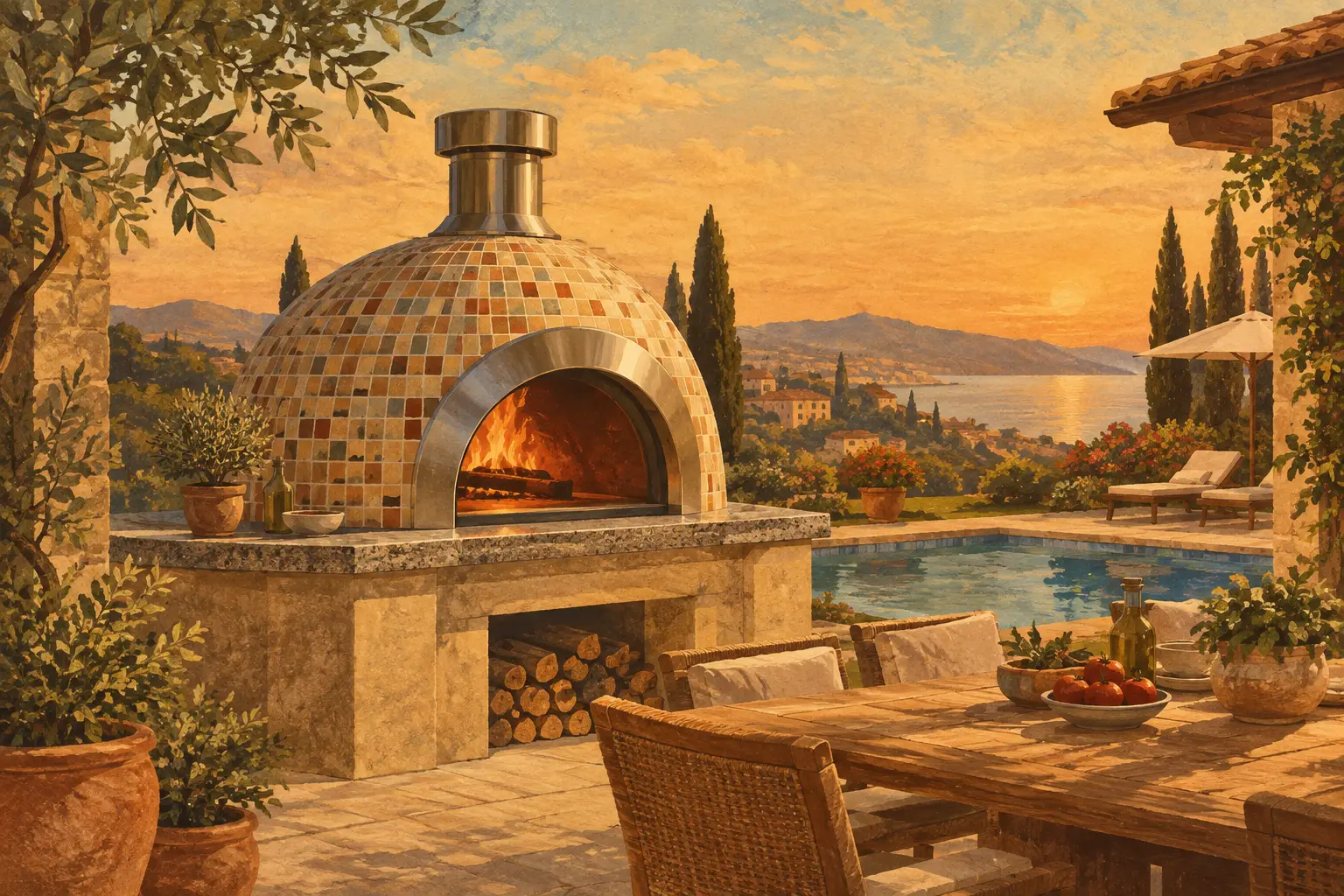
Natural stone, hand-finished stucco, brick, porcelain slab, and weather-rated millwork are being selected for more than durability. They provide visual weight. A substantial oven enclosure, for example, can become the visual anchor of the patio, especially when its finish echoes the home’s facade or pool surround. Tile may introduce color and regional character, while a custom engraved faceplate gives the oven a signature detail that cannot be replicated by a standard outdoor appliance.

This does not mean every backyard needs to be formal or symmetrical. Coastal homes may call for pale finishes, soft texture, and open sightlines. A Mediterranean-inspired property may support warmer stucco, arched openings, and richer tile. Contemporary architecture often benefits from clean-lined masonry and restrained color. The right approach depends on the house, but the principle remains the same: the kitchen should look commissioned for the property.

The Pizza Oven Becomes the Center of the Experience

Outdoor cooking has moved beyond utility. Homeowners want an element that creates a moment when guests arrive, and a real wood-fired pizza oven does that better than nearly any other feature. The live flame, aroma of hardwood, and theater of launching pizzas turn dinner into an event.

This is why authentic masonry ovens have become central to high-end outdoor kitchen planning. Their appeal is not merely visual. A real firebrick cooking chamber absorbs and retains heat in a way thin metal construction cannot, supporting the intense, radiant heat associated with Napoli-inspired pizza. That same retained heat also broadens the menu after pizza service, making it possible to roast vegetables, bake bread, cook seafood, or finish a cast-iron dish as the oven temperature gradually falls.

Placement matters. The oven should be visible from the primary seating area without forcing the cook to turn away from guests. It also needs adequate working space on both sides for dough, peels, serving boards, and finished pies. An oven squeezed into a corner may technically function, but it misses the social value that makes alfresco cooking memorable.

For properties where wood flavor is essential but scheduling flexibility matters, a hybrid wood-and-gas configuration can be a thoughtful choice. Wood provides the ritual and character of live-fire cooking, while gas can simplify certain service situations. The best fuel decision depends on how often the space will be used, who will operate it, and whether the kitchen serves casual family nights, frequent large gatherings, or commercial hospitality demands.

Zoned Layouts Make Entertaining Feel Effortless

A well-designed outdoor kitchen is rarely one continuous counter. The current preference is for distinct yet connected zones: fire, prep, grilling, serving, dining, and lounging. Separating these functions creates a more intuitive flow and keeps the cook from becoming isolated at the far edge of the patio.

The cooking zone should be organized around the oven and grill, with heat-resistant finishes and generous landing areas. Prep space belongs nearby, ideally with refrigeration, storage, and a sink within easy reach. The serving zone may be a stone-topped counter where guests can gather with a drink while pizza is being finished. Dining should sit close enough for easy service but far enough from the active cooking area to remain comfortable.

This zoning is particularly useful in Florida, where outdoor rooms are used through much of the year but must also account for strong sun, sudden rain, and humidity. A covered cooking area can protect the investment and improve comfort, while an adjacent open-air lounge retains the appeal of being outside. Thoughtful circulation is more valuable than excessive square footage. Even a compact patio can feel generous when every zone has a clear role.

Materials Are Chosen for Longevity, Not Just First Impressions

Luxury alfresco design is increasingly measured by how well it ages. Outdoor conditions are demanding, especially in coastal climates where moisture, salt air, ultraviolet exposure, and temperature changes can punish lesser materials. A beautiful outdoor kitchen should not require constant cosmetic rescue.

That is driving interest in genuine masonry, high-grade stainless steel, sealed natural stone, porcelain surfaces, and tile rated for exterior use. Real firebrick is especially important in a pizza oven because it is built to handle high heat repeatedly while holding the thermal mass needed for serious cooking. Decorative finishes matter, but the structure beneath them matters more.

There are trade-offs to consider. Natural stone offers depth and individuality, yet some varieties need periodic sealing. Porcelain is highly durable and low-maintenance, though it can feel more tailored and contemporary than organic. Stucco can create a timeless monolithic look, but it should be specified and finished correctly for its environment. Premium design does not mean choosing the same material for every property. It means choosing materials that suit the intended look and the realities of the site.

Lighting Extends the Kitchen Past Sunset

The most successful outdoor kitchens are designed for the evening from the start. A single bright floodlight may make food preparation possible, but it does little for atmosphere. Layered lighting is the better approach: practical task lighting at cooking and prep stations, soft ambient light for dining and lounging, and subtle accent light that reveals texture in stone, tile, and landscaping.

The oven itself contributes a warm, natural focal point after dark. Its fire creates movement and depth that artificial lighting cannot imitate, particularly when the oven is positioned as the visual heart of the entertaining area. The surrounding lighting should support that presence rather than compete with it.

Consider how the space will look from indoors as well. At night, an illuminated outdoor kitchen becomes part of the home’s view. A carefully finished oven enclosure, well-proportioned counters, and restrained lighting can make the backyard feel established even when no one is cooking.

Custom Details Separate a Luxury Kitchen From a Standard Setup

Customization is becoming more selective. Rather than adding every available accessory, discerning homeowners are choosing a few details with real impact: a tile color that ties into the pool, a custom oven faceplate, carefully proportioned arches, integrated storage, or seating designed around the way the family actually entertains.

Scale is one of the most overlooked details. An oversized oven can overpower a modest patio, while an undersized unit can feel visually and functionally inadequate in a large entertaining space. The right oven size should reflect the number of people typically served, the surrounding architecture, and the pace of cooking desired. A homeowner who hosts intimate dinners has different needs from a family that regularly serves pizza to twenty guests.

Commercial and hospitality settings require an additional layer of planning. Throughput, operator access, ventilation, code requirements, and presentation all deserve attention. Yet the same principle applies: a true masonry oven should perform at a high level while reinforcing the identity of the venue.

The most enduring alfresco spaces are not assembled from trends alone. They are built around a genuine ritual: gathering around the fire, sharing food made by hand, and returning to a place that feels more distinctive with every use. When the materials are real, the layout is intentional, and the oven is built to last, the backyard becomes more than an amenity. It becomes the setting people ask to visit again.

DEALWEEK

SUBSCRIBE AND GET A FREE TURNING PEEL WITH YOUR NEXT ORDER! OFFER ENDS SOON - DON’T MISS OUT!

We don’t spam!

No Comments

Post A Comment

This site uses Akismet to reduce spam. Learn how your comment data is processed.

Circular wood-fired oven emblem with red script
Privacy Overview

This website uses cookies so that we can provide you with the best user experience possible. Cookie information is stored in your browser and performs functions such as recognising you when you return to our website and helping our team to understand which sections of the website you find most interesting and useful.