



25 Sep Best Outdoor Kitchen Grill Brands for Luxury Homes
The Best Outdoor Kitchen Grill Brands for Luxury Outdoor Living
A luxury outdoor kitchen is only as capable as the grill at its center. The best outdoor kitchen grill brands are not defined by a polished hood or a long feature list alone. They earn their place through substantial materials, dependable heat, thoughtful built-in engineering, and a finish that belongs beside masonry, natural stone, and a handcrafted pizza oven.
Brands such as Lion Premium Grills, Fire Magic, Lynx, Alfresco, Twin Eagles, Hestan, and DCS have established their reputations by building equipment designed for permanent outdoor installations rather than occasional patio use. While each takes a different approach to design and cooking performance, the common denominator is durability, reliability, and a construction standard worthy of a custom outdoor kitchen.
For a serious outdoor living project, the decision should begin with how the grill will be used and what it must become within the larger architecture. A grill for occasional burgers has different requirements than a permanent cooking station designed for weekend entertaining, holiday gatherings, and open-fire meals that bring people together around the kitchen.
What Separates the Best Outdoor Kitchen Grill Brands
A premium grill brand designs for permanence. Whether you’re considering a Lion Premium Grill, a commercial-inspired Lynx Professional Grill, or a handcrafted Fire Magic Echelon Series model, the appliance should be built to live outdoors year-round, withstand repeated high-heat cooking sessions, and integrate seamlessly into a custom island.
The strongest brands distinguish themselves through details homeowners appreciate long after installation. The weight of the hood, the stability of the cooking grates, the consistency of the burner system, and the overall fit and finish often reveal more about quality than a product brochure ever will.
Construction quality should always be the first consideration. Brands such as Lion Premium Grills and Fire Magic have built loyal followings through heavy-duty stainless-steel construction, solid cooking grates, and robust burner systems designed for years of use.
A well-built grill feels substantial when opening the hood. Welds should be clean, seams precise, and controls engineered with confidence. Regardless of brand, the grill should feel like an architectural component of the outdoor kitchen rather than a removable appliance inserted into a cabinet opening.
The best brands also treat the firebox as the working heart of the grill, not merely hidden hardware. A durable firebox manages extreme heat without excessive warping, supports burners securely, and channels grease away from the flames. This becomes especially important when entertaining large groups and cooking continuously for hours rather than minutes.
Heat Control Is More Valuable Than Maximum BTUs
The best grill manufacturers understand that heat control matters more than headline BTU numbers. Premium brands including Twin Eagles, Alfresco, Lion Premium Grills, and Hestan focus on burner design, heat distribution, and controllability rather than simply advertising maximum output.
A grill should provide enough power for steakhouse-quality searing while maintaining precise low-temperature zones for roasting seafood, vegetables, poultry, and slow-cooked meats. Independent burner controls and thoughtful heat management systems often make a greater difference than raw specifications alone.
Pay attention to burner layout, heat deflectors, and the distance between the burners and grates. These elements affect whether a grill produces a consistent cooking zone or a collection of frustrating hot and cool spots.
Choose Fuel Around the Kitchen, Not the Catalog
For most luxury outdoor kitchens, built-in gas grills remain the preferred choice because they offer convenience, speed, and predictable performance. Whether selecting a Lion Premium Grill, a Fire Magic Aurora, or a DCS Series 9, homeowners benefit from immediate ignition and consistent temperature control.
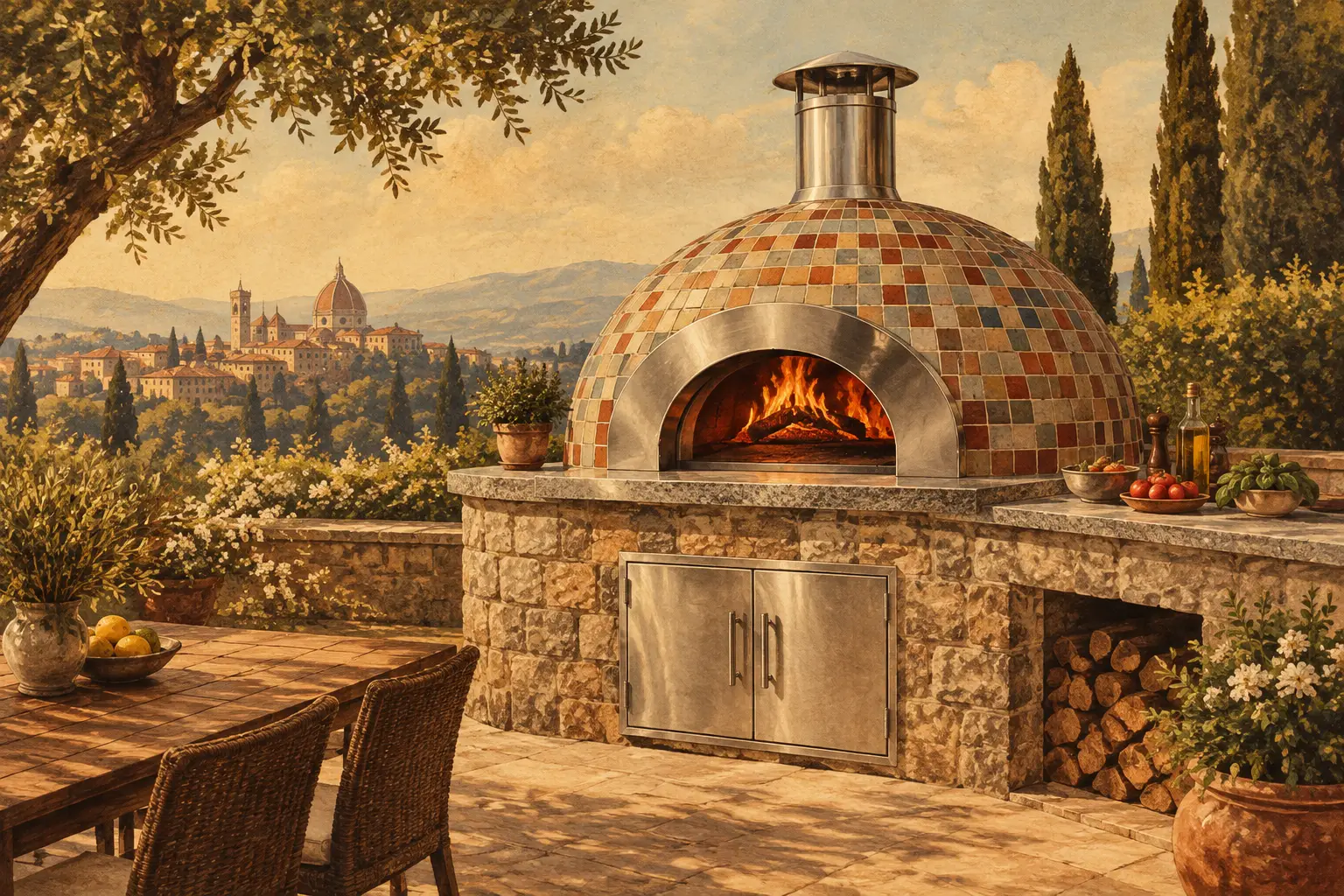
Many Forno Nardona projects pair a premium gas grill with a traditional wood-fired pizza oven. This combination offers the best of both worlds. The grill handles weeknight meals, entertaining, and high-volume cooking, while the firebrick oven delivers the drama, aroma, and live-fire experience that guests remember long after the meal ends.
Forno Nardona kitchens are often designed around this complementary approach. A precision gas grill provides convenience and versatility, while a real wood-fired oven brings authentic pizza, bread, roasted meats, and live-fire hospitality into the same architectural composition.
Features Worth Paying Attention To
Premium brands often provide a long list of available upgrades, but not every feature improves the cooking experience equally. Interior lighting, illuminated control knobs, rotisserie systems, infrared burners, and storage options should be evaluated based on how you actually cook.
For example, Lion Premium Grills offer practical features that appeal to homeowners seeking long-term value and dependable performance, while brands such as Lynx, Hestan, and Twin Eagles emphasize luxury refinements and advanced cooking technologies.
Match the Grill Finish to the Architecture
In a luxury setting, the grill should read as part of the design rather than an appliance inserted into it. Stainless steel provides a clean, professional contrast against stone, stucco, tile, and brick, while the surrounding materials introduce warmth and texture.
The visual richness should come from honed stone counters, handcrafted tile, detailed masonry work, and the sculptural presence of a real pizza oven.
For coastal homes and Florida environments, material quality becomes especially important. Salt air, humidity, heavy rain, and intense sunlight quickly expose shortcuts in construction. Brands such as Lion Premium Grills, Fire Magic, Twin Eagles, and Blaze have become popular choices because they are engineered specifically for outdoor conditions.
How to Make the Final Choice
When comparing outdoor kitchen grill brands, focus less on marketing claims and more on construction, engineering, and long-term value. Ask to examine a Lion Premium Grill, Fire Magic, Lynx, Alfresco, or Twin Eagles model in person whenever possible.
Open the hood. Lift a grate. Inspect the burners. Evaluate the controls. The physical experience often reveals more about the quality of a grill than its specification sheet.
The right grill should make cooking feel more controlled, more generous, and more enjoyable for years to come. Choose the one that deserves a permanent place beside your firebrick oven, fine stonework, and the table where your guests will remember the meal long after the evening ends.
Top Outdoor Kitchen Grill Brands Compared
While every luxury outdoor kitchen has unique requirements, a handful of premium manufacturers consistently stand apart for quality, performance, and long-term durability. The table below highlights the strengths of several leading outdoor kitchen grill brands.
| Brand | Best For | Construction Quality | Price Range | Notable Strength |
|---|---|---|---|---|
| Lion Premium Grills | Value-focused luxury kitchens | Heavy-duty stainless steel | $$$ | Excellent balance of performance, durability, and affordability |
| Fire Magic | High-end entertaining | Premium commercial-grade construction | $$$$ | Exceptional burner performance and craftsmanship |
| Lynx | Ultra-luxury outdoor kitchens | Professional-grade stainless steel | $$$$$ | Refined design with restaurant-inspired performance |
| Twin Eagles | Serious outdoor chefs | Handcrafted premium construction | $$$$$ | Precision temperature control and engineering |
| Alfresco | Frequent entertainers | Commercial-inspired construction | $$$$ | Powerful burner systems and versatile cooking options |
| Hestan | Design-conscious homeowners | Luxury-grade stainless steel | $$$$$ | Premium finishes and exceptional styling |
| DCS | Balanced luxury performance | Heavy-duty stainless steel | $$$$ | Outstanding reliability and cooking consistency |
| Blaze | Mid-to-high-end outdoor kitchens | Robust stainless-steel construction | $$$ | Strong feature set and long warranty coverage |
Forno Nardona Insight: For homeowners seeking an ideal blend of luxury, performance, and value, Lion Premium Grills often represent one of the strongest choices for pairing with a handcrafted wood-fired pizza oven. Homeowners seeking ultra-premium engineering may gravitate toward Fire Magic, Lynx, Twin Eagles, or Hestan, while Lion provides a compelling balance that fits many custom outdoor kitchen projects.
Sorry, the comment form is closed at this time.