



24 Jul Built In Oven vs Freestanding Oven Compared
A pizza oven changes how you use a property. It becomes the point where guests gather, where dinner becomes an event, and where an outdoor kitchen earns its place as a true entertaining space. The built-in oven vs. freestanding oven decision determines more than the oven’s location. It affects the architecture, installation requirements, cooking experience, and long-term character of the entire project.
For a serious wood-fired oven, the right answer is rarely about choosing the easiest option. It is about choosing the format that matches how you cook, how you entertain, and how permanent you want the investment to feel.
Built-In Oven vs. Freestanding Oven: The Essential Difference
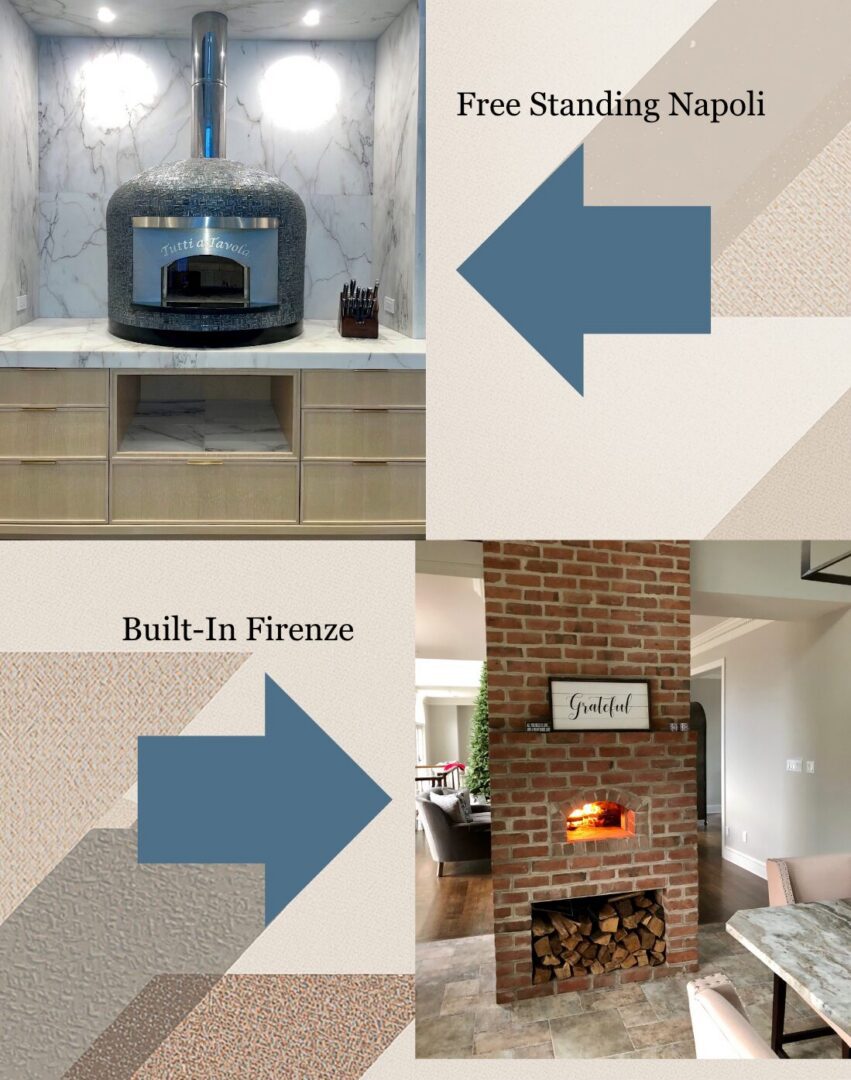
A built-in oven integrates into a larger structure. You might set it into a custom masonry surround, a stucco-clad outdoor kitchen, a stone feature wall, or an indoor cooking suite tailored for the application. The oven and its surrounding finishes read as one architectural composition.
A freestanding oven stands alone. It sits on its own factory-built base, stand, or cart, incorporating the cooking chamber, insulation, exterior shell, and chimney as a complete unit. It still looks beautiful and performs exceptionally, but it visually remains independent from the rest of the kitchen.
That distinction matters most when choosing a real wood-fired pizza oven. A handcrafted firebrick oven carries substantial weight, retains extraordinary heat, and deserves a base and setting that support its performance. Built-in and freestanding models both produce exceptional food. The difference lies in how the oven lives within the property.
Why a Built-In Oven Makes a Stronger Architectural Statement
For homeowners planning a permanent outdoor kitchen, a built-in oven offers a level of cohesion that a standalone appliance cannot replicate. You can position the oven beside a grill, refrigeration, prep counters, storage, and seating so the cooking zone works as a complete environment rather than a collection of individual products.
This format also gives you greater control over the final appearance. Tile can complement a pool finish or interior kitchen palette. Stone, stucco, brick, and decorative faceplates can establish a formal Mediterranean, coastal, contemporary, or old-world look. Designers can thoughtfully incorporate the oven’s venting system into the structure instead of letting it appear as an afterthought.
A true masonry oven becomes the visual anchor of this arrangement. Decorative material does not merely cover its dome. Real firebrick construction stores heat in the mass of the oven, supporting high-temperature pizza cooking as well as longer roasts, breads, vegetables, and slow-cooked dishes after the fire settles. That retained heat provides a meaningful performance advantage for hosts who want more than a quick pizza night.
Built-in installation also lets you tailor the oven height to the cook. A properly planned hearth height makes launching, turning, and retrieving pizzas more comfortable, especially during long gatherings or commercial service. You can place surrounding counter space exactly where you need it for dough trays, peels, ingredients, and finished pies.
The trade-off is commitment. A built-in oven requires deliberate planning before construction begins. You must design its foundation or supporting structure for the oven’s weight, and you must consider access for delivery and placement early. Once complete, it stays put. For many luxury properties, that permanence is the appeal.
Built-In Is Best for a Long-Term Kitchen Plan
Choose a built-in oven when the outdoor kitchen is a central feature of the home, when architectural continuity matters, and when you want the oven to add lasting presence to the property. It particularly suits new construction, major renovations, poolscape projects, and hospitality settings where the oven itself becomes part of the guest experience.
Indoor built-in applications require even more careful coordination. You must address venting, clearances, combustible materials, structural support, and local code requirements with qualified design and installation professionals. The result can be extraordinary, but you should never treat an indoor wood-fired oven as a simple appliance swap.
Where a Freestanding Oven Shines
A freestanding oven is often the practical choice when you lack construction plans or want to preserve flexibility. It brings authentic live-fire cooking to a patio, terrace, or existing outdoor area without requiring a full custom kitchen build around it.
This does not mean settling for lesser cooking potential. A well-built freestanding wood-fired oven easily reaches the high temperatures Neapolitan-style pizza requires and retains sufficient heat for versatile cooking. The key is what sits beneath the finish: dense firebrick, effective insulation, a properly designed dome, and a door that helps manage retained heat when the cooking style calls for it.
Freestanding placement also benefits properties where the ideal cooking position sits away from the house. A detached entertainment area, garden pavilion, or poolside lounge may call for an oven that stands as its own destination. In these settings, the oven creates an inviting focal point without forcing a large renovation of the main patio.
There are limits to that flexibility. Freestanding does not always mean easily movable, particularly with substantial masonry ovens. You must place even a model on a base on a stable, level surface that can support its loaded weight. It also needs appropriate clearance, ventilation, and protection from the weather based on its installation specifications. Moving a serious oven later may require professional equipment and planning.
Freestanding Is Best for Flexible Outdoor Living
A freestanding oven makes sense when you want a self-contained focal point, when an existing patio cannot accommodate major construction, or when you are still deciding how the larger outdoor space will evolve. It is also a compelling option for catered events, food-focused venues, and select commercial concepts that benefit from a visible oven without a fully built masonry enclosure.
For coastal and humid climates, choose exterior materials with the environment in mind. Durable finishes, thoughtful drainage, appropriate covers, and careful site placement help preserve the appearance and function of an oven exposed to salt air, rain, and intense sun.
Cooking Performance Is Not Defined by the Base Alone
It is easy to assume a built-in oven automatically cooks better because it looks more substantial. That is not always true. The cooking result depends on the oven’s chamber design, thermal mass, insulation, fuel management, and the skill of the person tending the fire.
A premium freestanding oven featuring real firebrick delivers remarkable heat retention and an authentic flame pattern across the dome. Likewise, expensive finishes surrounding an ordinary appliance will not create the same baking environment as a purpose-built masonry model.
Focus first on the oven’s core construction. Ask whether genuine refractory materials make up the cooking chamber, how the manufacturer designed the insulation, what temperatures the oven maintains, and whether its size matches the number of pizzas or dishes you expect to cook at once. Then decide whether that oven belongs in a permanent architectural surround or on an independent base.
Fuel is another part of the decision. Wood delivers the ritual, aroma, live flame, and deep visual appeal that define traditional pizza cooking. A hybrid wood-and-gas configuration may suit owners who want wood-fired character while also valuing faster ignition and predictable heat management for busy occasions. Both built-in and freestanding formats support the right fuel strategy when you select and install them correctly.
Installation Questions to Resolve Before You Choose
Before selecting either format, establish the practical facts of the site. Measure the route from delivery access to the final location, including gates, steps, turns, and overhead obstructions. Confirm the supporting surface or foundation safely carries the oven. Consider chimney height, smoke direction, nearby trees, rooflines, seating areas, and adjacent structures.
For a built-in project, decide where prep space, fuel storage, refrigeration, lighting, and seating will go before designing the enclosure. An oven centered on a wall may look impressive, but a cook needs landing space on both sides and a clear path between the oven and the ingredients. The best outdoor kitchens make live-fire cooking feel composed rather than crowded.
For a freestanding oven, think beyond the footprint of the stand. You still need room to work with peels, stack wood safely, open the door, and host people without placing them in the cooking path. A freestanding oven deserves the same site planning as any significant outdoor feature.
Make the Oven Fit the Life You Intend to Live
The strongest choice is not the one that photographs best on installation day. It is the one that will still suit the property after years of pizza nights, holidays, and long dinners outdoors. If you want a tailored entertaining environment with enduring architectural presence, a built-in oven is difficult to surpass. If you want authentic firebrick performance with more independence from a major construction project, a freestanding oven offers the right expression of luxury.
Forno Nardona approaches both paths with the same standard: we build the oven for real fire, real cooking, and a lasting place in the home. Start with the meals you want to create and the people you want around the hearth. The right oven format will become clear from there.
For more articles like this, check out our main website.
Sorry, the comment form is closed at this time.