

23 Sep Dome Oven Versus Steel Oven: What Lasts?
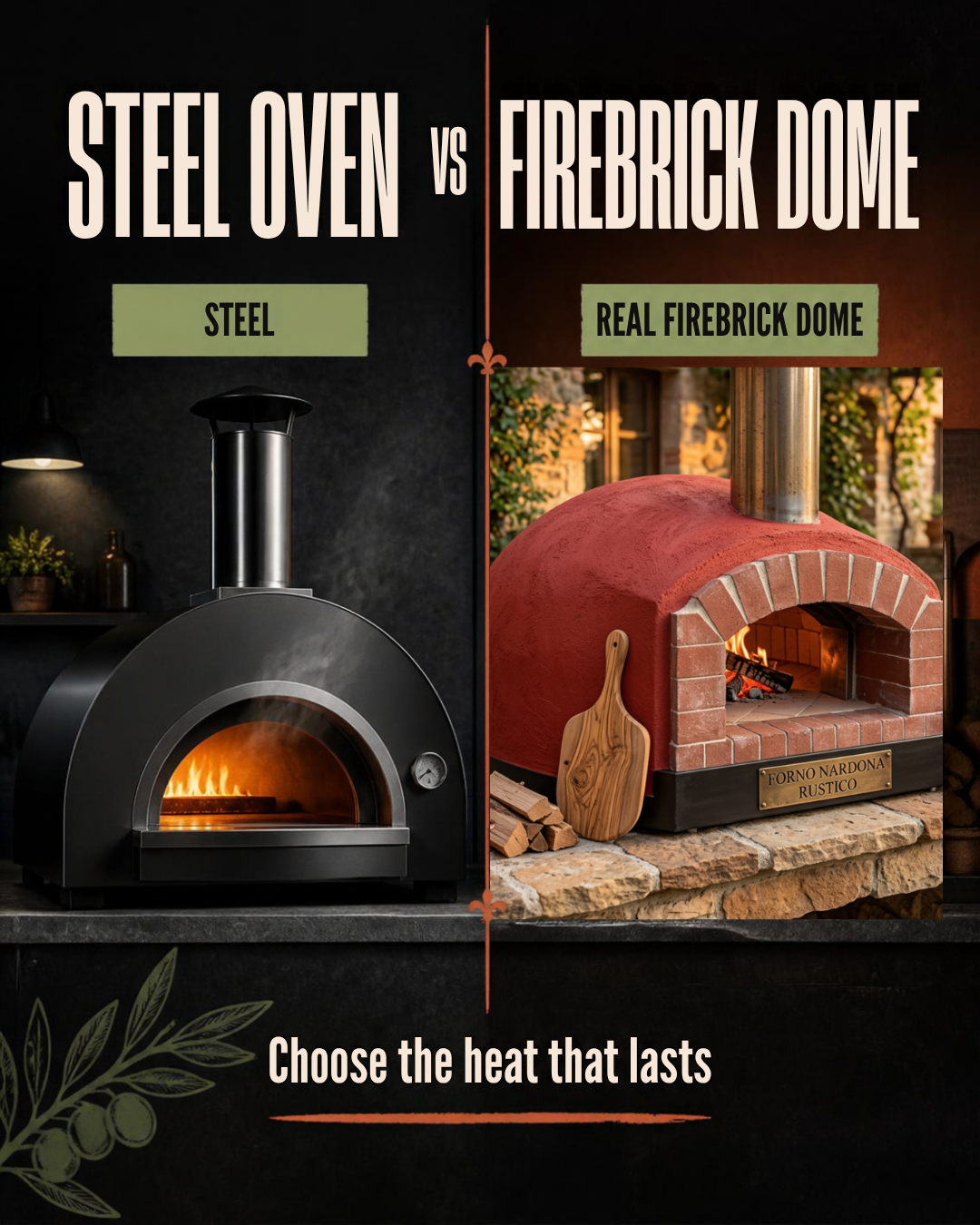
Firebrick Dome vs Steel
A pizza oven can look extraordinary on installation day and still disappoint once the fire has burned down. That is why the dome oven versus steel oven decision deserves more attention than a simple comparison of materials. The real question is how each oven stores heat, cooks under live fire, ages outdoors, and supports the kind of entertaining or food service experience you intend to create.
For a quick weeknight pizza, a steel oven can be a capable option. For homeowners building a permanent outdoor kitchen, or operators who need consistent production through a service, a true masonry dome offers a different class of performance. Its value is not only in the pizza it produces. It is in the thermal mass, visual presence, and long-term permanence built into the oven itself.
Dome Oven Versus Steel Oven: The Essential Difference
A traditional dome oven is a masonry cooking chamber formed from real firebrick and refractory materials. Firebrick absorbs the energy of the fire, holds it within the dome and cooking floor, then returns that heat gradually and evenly to the food. The dome shape is not merely decorative. It helps circulate flame and radiant heat across the chamber, creating the intense top heat and steady floor temperature that define exceptional Neapolitan-style pizza.
A steel oven uses a metal chamber, commonly with insulation and often with a refractory cooking floor. Its lighter construction allows it to heat up more quickly and makes it practical where portability or a lighter installation matters. Many steel ovens also use a domed interior profile, which can blur the terminology. In this comparison, the meaningful distinction is not whether an oven has a curved roof. It is whether its cooking chamber is substantial masonry or primarily fabricated steel.
That distinction changes the cooking experience. Steel transfers heat rapidly but has relatively little thermal mass. Masonry takes longer to preheat, then remains stable long after the flames settle. Neither quality is automatically better. The right choice depends on whether speed and mobility matter more than sustained, authentic live-fire performance.
Heat Retention Is Where Masonry Earns Its Place
Heat retention is the central advantage of a real brick dome. A properly fired masonry oven charges its thick dome and floor with energy. Once the chamber is fully saturated, it can cook multiple pizzas with far less temperature swing than a thin-walled metal oven. After pizza service, retained heat can continue working for breads, roasted vegetables, seafood, braises, and slow-cooked dishes.
This is especially valuable when guests arrive in waves. Instead of rushing every pie through a narrow window of peak heat, the host can maintain a composed, confident cooking rhythm. In a restaurant setting, stable heat also gives the pizzaiolo a more predictable floor and dome relationship from one pizza to the next.
Steel responds faster to a fresh fire because the chamber itself does not need to absorb as much energy. That can be useful for a smaller gathering or a spontaneous dinner. But it also means the oven can react more sharply when the door is opened, a pizza is launched, or fuel is moved. The cooking floor may recover quickly in a well-designed steel model, yet it generally cannot provide the same reserve of stored heat as a substantial firebrick oven.
The trade-off is honest and straightforward. A masonry oven asks for a more deliberate preheat. In return, it rewards that preparation with a longer, more versatile cooking session.
Pizza Quality Depends on Balanced Heat
Great pizza is not created by air temperature alone. The floor must cook the underside without scorching it, while the dome must provide enough radiant energy to blister the rim, melt toppings, and finish the pie before the center dries out. This balance is where a true dome oven excels.
Firebrick has a measured, forgiving quality. It releases heat into the dough with more control than a thin steel surface, helping produce a crisp, well-leoparded base rather than a bottom that races ahead of the toppings. Meanwhile, the curved brick dome reflects radiant heat down onto the pizza. The result is the characteristic contrast people expect from serious wood-fired cooking: a tender interior, lifted cornicione, crisp base, and lively char.
A steel oven can certainly make enjoyable pizza, particularly when it includes a quality stone or refractory floor. Its limitations tend to become clearer during longer cooking sessions, repeated launches, or more demanding dough styles. With less mass surrounding the fire, the oven is more dependent on careful flame management and timing.
For the homeowner who wants one or two pizzas as quickly as possible, that may be an acceptable exchange. For the host who wants to serve a table of guests with restaurant-level consistency, a brick dome is the more assured platform.
Construction Determines How an Oven Ages Outdoors
An outdoor oven must contend with more than fire. It faces rain, humidity, UV exposure, temperature shifts, and, in many coastal environments, salt-laden air. Materials and construction methods determine whether an oven remains handsome and dependable after years of use.
Steel can be durable, but it must be engineered carefully. High heat cycles cause metal to expand and contract. Over time, this movement can stress joints, finishes, doors, and insulation systems. Surface corrosion is also a real consideration if protective coatings are damaged or maintenance is deferred. A steel oven is not inherently fragile, but its longevity relies heavily on gauge, fabrication quality, insulation, weather protection, and responsible care.
Masonry operates differently. Real firebrick is made for extreme heat and repeated firing. A properly constructed dome is not a thin shell trying to contain a fire. It is the thermal structure that makes the fire useful. When protected by appropriate insulation and a weather-ready exterior finish, the oven becomes a lasting architectural feature rather than a seasonal appliance.
This does not mean masonry requires no consideration. A permanent oven needs a properly engineered foundation, a suitable location, and professional attention to venting, clearances, and weatherproofing. Yet those requirements are part of what makes it a permanent investment. It is built into the life of the property, not simply placed beside it.
Design Presence Matters in a Luxury Outdoor Kitchen
A steel oven often reads as a cooking device. A custom dome oven becomes a focal point. Its arched opening, handcrafted face, tile selection, and proportions can be coordinated with stonework, cabinetry, pool finishes, and the surrounding architecture. It gives an outdoor kitchen a center of gravity.
For luxury homes, that difference carries real weight. A beautiful oven invites conversation before anyone tastes the pizza. It frames the fire, draws people toward the cooking area, and turns meal preparation into part of the occasion. In hospitality spaces, the same effect can create theater and reinforce the credibility of a wood-fired menu.
Customization also favors masonry. The exterior can be finished to complement a contemporary coastal terrace, Mediterranean courtyard, traditional estate, or commercial dining concept. Engraved faceplates and hand-selected tile colors add distinction without compromising the working heart of the oven: a serious firebrick chamber.
This is where a built-to-order maker such as Forno Nardona brings a clear advantage. The goal is not to fit a generic oven into a finished space. It is to create an oven and outdoor kitchen that appear intended for the property from the beginning.
Installation, Fuel, and Practical Considerations
A steel oven may make sense when the installation must remain relatively light, movable, or compact. It can be a practical choice for patios where structural limits rule out a large masonry build, for temporary event operations, or for buyers who place a premium on rapid startup.
A dome oven is better suited to a permanent outdoor kitchen, dedicated cooking patio, restaurant, hospitality venue, or food truck application engineered for the oven’s weight and venting requirements. It needs a stable base because that mass is fundamental to its performance. A professional site review should account for placement, chimney path, combustible clearances, access for delivery, and local code requirements.
Fuel choice deserves equal consideration. Wood provides the visual drama, aroma, and live-fire control many owners want. Hybrid wood-and-gas configurations can add convenience, offering a dependable way to bring the oven to temperature while preserving the option to cook with wood. For high-end residential and commercial users, this flexibility can make frequent use more realistic without giving up authentic oven capability.
Which Oven Fits the Way You Entertain?
Choose a steel oven when portability, a lighter footprint, and a fast warm-up are the defining priorities. It can be an effective tool for casual pizza nights and settings where a permanent installation is not possible.
Choose a true firebrick dome when you care about retained heat, repeated pizza performance, multi-course live-fire cooking, architectural impact, and a structure built to serve the property for years. It requires more planning, but it also offers more than a momentary cooking convenience. It creates a destination.
The best decision begins with an honest picture of how you want people to use the space. If the fire is meant to gather family, friends, or guests around a lasting ritual of cooking and conversation, build around an oven with the depth to hold that experience long after the first pizza leaves the hearth.
No Comments