

21 Sep Plan a Pizzeria Oven Project That Performs
Planning a Pizzeria Oven Project
A memorable pizza night begins long before the first dough is stretched. A pizzeria oven project is an investment in fire, flavor, architecture, and the way people gather at your home or business. Treating it as a simple appliance purchase often leads to an undersized oven, an awkward patio layout, or a cooking station that looks added on rather than intentionally built.
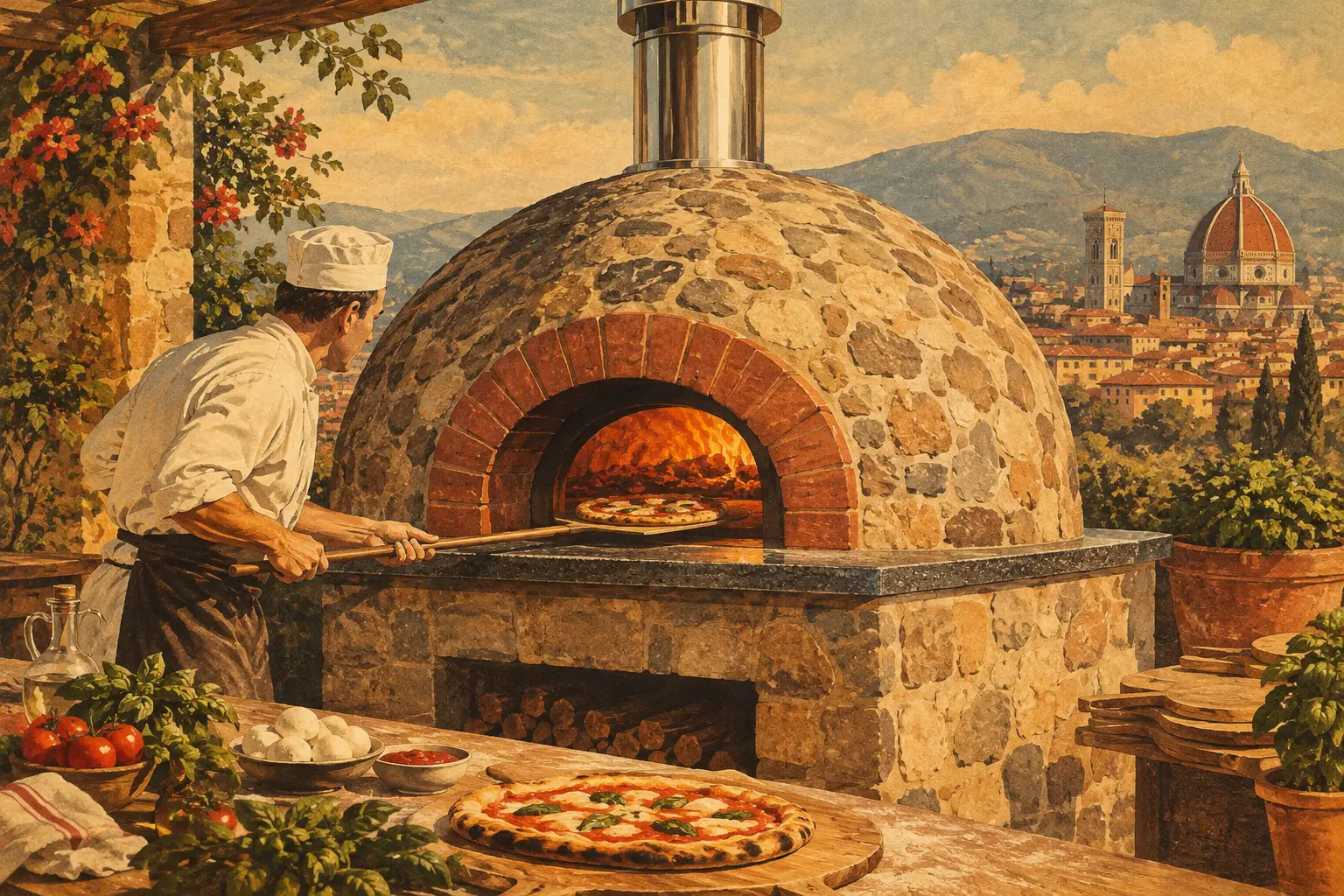
The better approach is to plan the oven as the heart of the space. A true wood-fired oven has visual authority, but it must also deliver the heat retention, working room, and access required to cook with confidence. Whether the goal is a private outdoor kitchen in Florida, a hospitality venue, or a high-output commercial concept, the details chosen before construction determine how the finished oven performs for decades.
Start the Pizzeria Oven Project With the Experience
Before selecting an oven style or finish, define the experience you want to create. For a residential setting, that may mean hosting a dozen guests while the cook remains part of the conversation. For a restaurant or catering operation, it may mean producing consistent pizzas during a concentrated service window without losing temperature between orders.
Those uses require different priorities. A homeowner may value a generous landing surface, a nearby beverage station, and a facade that complements the home’s architecture. A commercial operator needs a properly sized cooking floor, efficient workflow, ventilation planning, and durable access for staff. Both benefit from real masonry construction, but the dimensions and surrounding kitchen should reflect the actual pace of use.
Think beyond pizza alone. The right oven can roast fish, bake bread, sear cast-iron dishes, and slow-cook large cuts after the active flame has settled. That versatility is one reason an authentic firebrick oven becomes a permanent gathering place rather than an occasional novelty.
Choose Real Firebrick Construction Over Surface Heat
An oven’s exterior can be beautiful, yet its internal construction is what defines its cooking character. Authentic wood-fired pizza depends on stored heat radiating from the floor, dome, and walls. A genuine masonry oven built with real firebrick absorbs and holds energy in a way thin metal or lightly insulated units cannot replicate.
That thermal mass matters when the door opens, pizzas move in and out, and the cook works through several rounds. A well-built brick dome recovers heat with authority and creates the intense, balanced environment associated with Napoli-inspired pizza: a crisp, leopard-spotted crust, fully baked cornicione, and toppings cooked quickly without becoming dry.
There is a trade-off. Greater thermal mass requires thoughtful installation support and takes longer to heat than a lightweight appliance. For owners who want authentic performance, that preparation is part of the ritual, not a drawback. It also returns value after the pizza service ends, when retained heat can be used for roasting and baking.
Size the Oven for Your Real Service Volume
The most common planning error is choosing an oven based only on its visual footprint. The cooking floor size, door opening, dome geometry, and heat retention all affect what an oven can produce in a practical service period.
For intimate family meals, an oven sized for one or two pizzas at a time may be ideal. It heats efficiently, fits more naturally within a residential kitchen, and still provides ample capability for entertaining. If large gatherings are frequent, a larger floor gives the cook room to manage several pizzas, reposition wood, and use different heat zones without crowding the chamber.
Commercial buyers should calculate around peak demand rather than average volume. Consider how many pizzas must be produced during the busiest hour, how long each pizza remains in the oven, and whether the menu includes breads, proteins, or baked dishes competing for floor space. Choosing too small an oven can force staff to work around a bottleneck every busy night. Choosing an oversized unit for a modest operation can demand more fuel and training than necessary.
Forno Nardona builds its oven lines around the principle that performance and proportion must belong together. An oven should feel substantial in its setting while offering the capacity its owner will genuinely use.
Place the Oven Where Cooking Feels Natural
A luxury outdoor kitchen succeeds when its workflow is effortless, not when every component is simply present. The oven needs a clear approach, a safe cooking zone, and sufficient counter space on both sides. The cook should be able to stretch dough, dress pizzas, load the oven, retrieve finished food, and plate it without crossing the entire patio.
Plan for a durable landing area immediately beside the oven. This is where hot pans, peels, and finished pizzas need to rest. Include dedicated prep space nearby, preferably with refrigeration and dry storage positioned outside the hottest work zone. If a grill is part of the kitchen, give it its own working counter so two people can cook without competing for the same surface.
Placement also shapes the social atmosphere. Facing the oven toward the seating area allows the fire to become part of the entertainment. At the same time, avoid placing the oven where smoke, heat, or the active cooking zone interferes with guests. A thoughtful layout keeps the cook engaged without turning the gathering into an obstacle course.
Respect Structure, Clearance, and Venting
A masonry oven is a permanent architectural feature. Its base and supporting surface must be designed for its finished weight, including the oven, stand, facing materials, counters, and any surrounding structure. This is not the place to rely on assumptions about an existing deck, patio, or framed enclosure.
Outdoor installations need appropriate clearance from combustible materials and consideration for rooflines, screens, trees, and adjacent structures. Indoor and enclosed installations require especially careful flue and ventilation design. Local codes, permitting requirements, and site conditions vary, so coordinate the project with qualified installers and the relevant local authorities before construction begins.
For coastal and humid climates, materials deserve extra attention. Moisture management, weather-resistant finishes, and correctly detailed enclosures help preserve the oven’s appearance and structural integrity. A custom cover can protect the oven between uses, but it should complement, not replace, proper construction.
Decide Between Wood-Fired and Hybrid Operation
Wood is the traditional choice for a reason. It delivers the live flame, aroma, and visual theater that make a brick oven such a powerful centerpiece. For owners who care deeply about the craft of fire management, wood-fired cooking offers a direct and rewarding connection to the food.
A hybrid wood-and-gas configuration can be the stronger choice when convenience and consistency are equally important. Gas provides dependable ignition and controlled heat for a fast start, while wood can be added for live-fire character when the menu or occasion calls for it. This can be particularly valuable for hospitality settings, busy households, and operators who need flexibility across different service periods.
Neither option is universally better. The right fuel choice depends on how often the oven will be used, who will operate it, the desired cooking style, and the site’s utility access. The best projects preserve authentic oven performance while making operation realistic for the owner.
Make the Finish Worthy of the Masonry
The oven is usually the visual anchor of an outdoor kitchen, which means its finish should be considered as carefully as its chamber size. Tile color, stone, stucco, brick, metal detailing, and an engraved faceplate can connect the oven to the home’s exterior palette or establish it as a deliberate focal point.
Avoid treating the facade as a final decoration. The oven’s silhouette, arch, chimney treatment, and surrounding counters should be designed together from the outset. A traditional rustic face may suit a Mediterranean courtyard, while a cleaner, tailored presentation can complement contemporary architecture. The strongest designs do not chase trends. They look as though they were always meant to stand there.
For commercial projects, the facade also communicates something before the first pizza leaves the oven. Visible brickwork and a live flame signal craft, permanence, and a menu built around genuine technique. In a market full of interchangeable equipment, that presence can set the tone for the entire guest experience.
Build for the Way You Will Use It Years From Now
A pizzeria oven project deserves patient planning because it is not meant to be replaced after a few seasons. Select a builder and oven partner with real masonry knowledge, clear installation requirements, and the ability to tailor the final piece to the property and the cook.
Leave room for the rituals that make the oven valuable: a stack of properly seasoned wood, tools stored within reach, a place for guests to watch the fire, and counters broad enough to invite another pair of hands into the process. When the structure, performance, and design are resolved together, the oven does more than cook exceptional pizza. It gives every gathering a reason to linger.
No Comments