




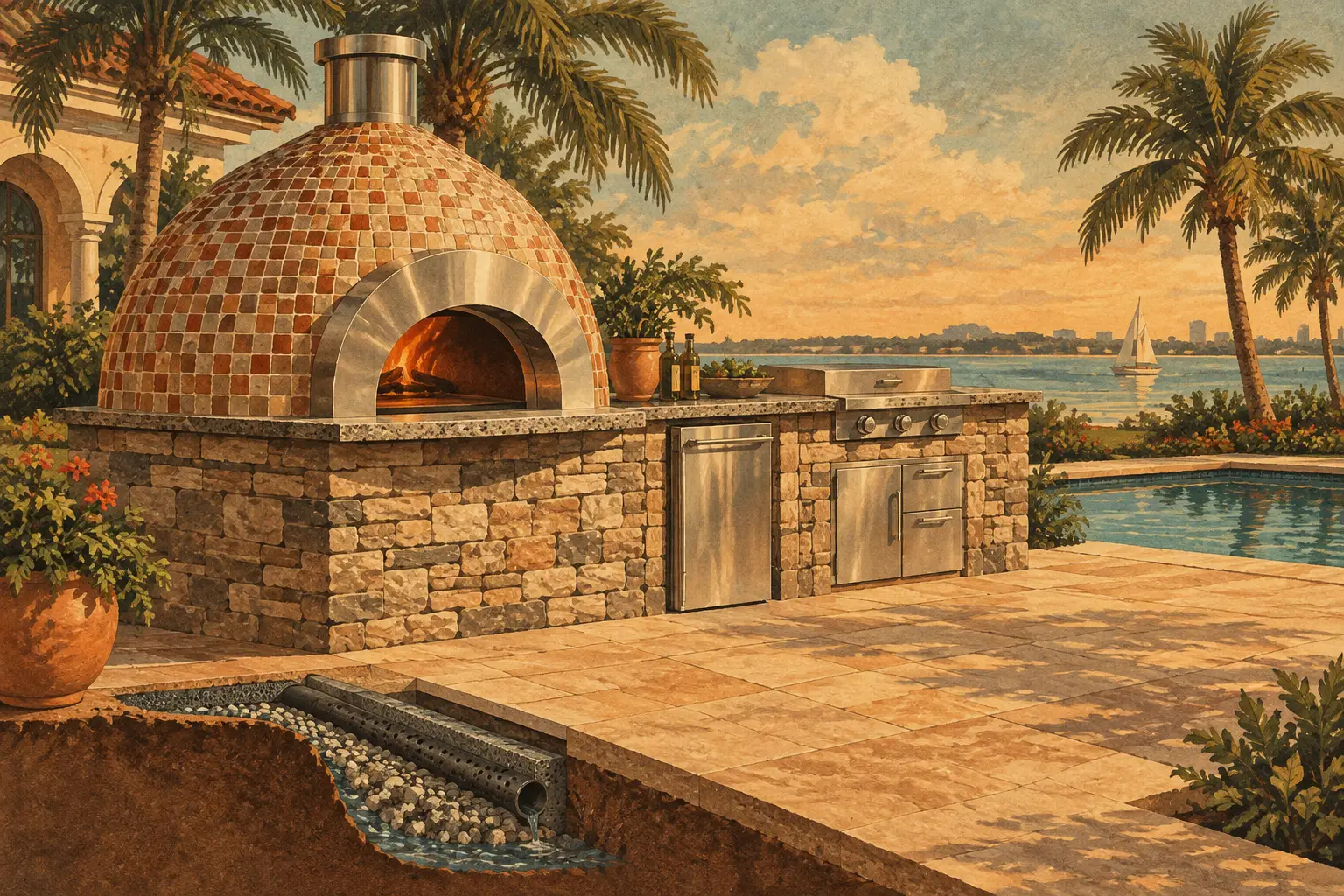
01 Oct Florida Outdoor Kitchen Drainage Guide for Luxury Homes
A beautifully built outdoor kitchen can be undermined by something most homeowners never see in the finished photographs: where the water goes. In Florida, a sudden summer downpour can put more stress on a patio in one hour than a light rain climate puts on it in weeks. This Florida outdoor kitchen drainage guide explains the decisions that protect fine cabinetry, masonry, appliances, and the investment beneath them.
A luxury outdoor kitchen should feel permanent because it is built to be permanent. That requires more than selecting an exceptional wood-fired oven, premium grill, and architectural finishes. It requires a drainage strategy designed before cabinetry is set, countertops are templated, and stone is laid.
Why Florida Outdoor Kitchen Drainage Demands More Attention
Florida outdoor living is rewarding precisely because kitchens are used year-round. That also means they face year-round humidity, wind-driven rain, salt exposure near the coast, and intense afternoon storms. Water that sits against a cabinet base or flows toward the home does not stay a cosmetic issue for long. It can stain pavers, weaken soils, encourage mildew, corrode hardware, and create expensive failures behind an otherwise flawless façade.
The primary goal is simple: keep surface water moving away from the house and kitchen structure, while routing sink wastewater into an approved sanitary drainage system. Those are two different water paths, and treating them as one is a costly mistake.
Rainwater belongs in a properly planned site drainage system. Sink water, beverage station water, and other fixture discharge generally require a code-compliant plumbing connection. Never assume that a patio drain, landscape bed, or dry well is an appropriate destination for kitchen wastewater.
Start With the Finished Grade, Not the Appliances
The patio’s finished elevation is the foundation of the entire plan. Before an oven island or grill run is designed, establish how water will move across the finished surface and away from the residence. A qualified installer or site professional should evaluate existing grades, roof runoff, nearby doors, pool decks, and the property’s available drainage routes.
A common target is a subtle slope away from the home, often around 1/8 to 1/4 inch per foot depending on the paving system, surface texture, and local requirements. The precise number is less important than the result: water should not pond at the kitchen, at a door threshold, or against the home’s foundation.
This is where luxury projects benefit from early coordination. A large masonry pizza oven has real structural weight, and its base should rest on a properly engineered, stable foundation. The oven pad cannot be treated as an isolated slab if it interrupts the patio’s water path. Its surrounding finish elevations, joints, and drainage details must work together.
Watch for the flat-patio trap
A patio can look level while still holding water. Large-format porcelain, natural stone, and smooth concrete make small low spots especially noticeable after rain. Water may collect beneath cabinet toe kicks or run toward the rear of an island, where it remains hidden until mildew, staining, or corrosion appears.
Ask your builder where water will travel during a heavy storm, not just on a sunny installation day. The answer should be visible in the grading plan and in the finished work.
Design Surface Drainage Around Real Rainfall
When the kitchen sits on a broad covered lanai, surface drainage may be relatively straightforward. An open pool deck, rooftop terrace, or uncovered patio requires more deliberate collection points. The correct solution depends on the site, but it should be designed for intense rain rather than average conditions.
Channel drains are often appropriate where runoff crosses a doorway, reaches the edge of a covered area, or gathers at a transition between two hardscape elevations. A narrow linear drain can preserve a clean architectural look while intercepting water before it reaches cabinetry or the home. It must be sized, sloped, and connected to a suitable outlet, however. A decorative grate over an undersized or poorly routed drain solves nothing.
Area drains can work at low points in larger paved spaces. They are not a substitute for proper grading. If every drop of water must find one small drain because the patio is flat, debris and leaf litter will eventually expose the weakness of the design.
For permeable pavers and gravel-adjacent spaces, subsurface drainage may be part of the system. These installations can perform beautifully, but only when the base materials, edge restraints, and outlet path are correctly specified. Florida’s soils, water table, and local stormwater rules can make a simple dry well impractical in some locations.
Separate Roof Water From the Kitchen Zone
Roof runoff is one of the most overlooked threats to outdoor kitchens. A single roof valley can release a concentrated sheet of water directly beside an oven enclosure or cabinet wall. Over time, that force can wash out joint sand, erode planting beds, and saturate the soil around a slab.
Gutters, downspouts, and extensions should carry roof water away from the cooking area and foundation. Where an outdoor kitchen is built beneath a roofline, verify where the downspouts discharge before finalizing the island location. Relocating one early is far easier than rebuilding a finished counter run later.
Covered kitchens still need drainage planning. Wind-driven rain can reach deep into a lanai, and condensation, cleaning water, and splash from a nearby pool do not disappear simply because there is a roof overhead.
Plan Sink Plumbing as a Separate System
An outdoor sink makes entertaining easier, but it adds real plumbing requirements. The drain line typically needs an appropriate trap, venting arrangement, cleanout access, and connection to an approved sanitary system under applicable local code. In many Florida jurisdictions, this work requires permits and a licensed plumbing professional.
The exact approach depends on the kitchen’s distance from the home, the availability of existing drain lines, the fixture configuration, and local rules. A sink near an exterior wall may be relatively direct to connect. A freestanding island across the patio can require more careful routing below the slab or through a planned utility chase.
Avoid sending sink discharge to a landscape drain or stormwater line. Food residue, soaps, and grease do not belong there. If the kitchen includes a bar sink, ice maker, or refrigeration with a drain requirement, coordinate every fixture at the design stage so the plumbing is not improvised after the cabinets are installed.
Keep grease out of the plan
Even residential outdoor kitchens benefit from good habits. Wipe cookware and grates before washing, and do not treat the sink as a disposal point for cooking grease. Commercial kitchens have additional requirements that may include grease management, fixture sizing, and health department review. A restaurant-grade oven installation deserves commercial-grade utility planning from the start.
Protect Cabinet Bases and Masonry Details
Drainage should not depend on cabinet materials alone. Marine-grade hardware, durable powder-coated finishes, stainless steel components, and properly sealed masonry all contribute to longevity, but none of them are intended to live in standing water.
Outdoor cabinets should sit on a stable, finished surface with a clear strategy for preventing water from collecting at the base. Adjustable legs, raised plinths, and carefully detailed toe kicks can help where appropriate, but they do not replace correct patio slope. Leave service access for plumbing connections and avoid sealing areas so tightly that incidental moisture cannot dry.
For masonry oven enclosures, pay close attention to the transition between the oven, cladding, countertop, and adjacent walls. Flashing, cap details, sealants, and properly selected exterior finishes protect the structure from water intrusion. A handcrafted firebrick oven is designed for extraordinary heat retention and authentic cooking performance; the surrounding enclosure must be detailed with the same discipline.
Near Florida’s coast, salt air increases the need for corrosion-resistant fasteners, hinges, vents, and trim. The drainage plan also matters more because salt-laden moisture that lingers in concealed areas can shorten the life of otherwise premium components.
Build Drainage Into the Design Conversation
The best time to discuss drains is during design, alongside appliance locations, gas lines, electrical service, lighting, and ventilation. Once the kitchen footprint is locked, choices become narrower and more expensive.
Forno Nardona approaches custom outdoor kitchens as architectural installations, not a collection of appliances placed on a patio. That mindset matters when a statement pizza oven becomes the visual and functional center of the space. Its foundation, utility paths, counter heights, roofline, and surrounding drainage all deserve coordinated planning.
Before construction begins, confirm four practical points with the project team:
- Where does rainwater flow during a heavy storm?
- Where will roof runoff discharge?
- How will each sink or drain-required appliance connect to sanitary plumbing?
- Which local permits, inspections, and site rules apply?
These questions are not glamorous, but they protect the craftsmanship everyone will notice. A luxury outdoor kitchen should invite friends to gather around the fire, not send the homeowner outside after every storm to sweep water away from the cabinets. Plan the water path with the same care as the oven, and the entire space will age with far more grace.
Sorry, the comment form is closed at this time.