



14 Aug Neapolitan Style Oven Benefits That Last
A pizza that bakes in 90 seconds is only the visible result. The real neapolitan style oven benefits begin with what happens beneath the surface: a properly proportioned dome, a live flame rolling across the ceiling, and dense firebrick storing heat where thinner, appliance-style materials cannot. For homeowners who care about authentic cooking and an outdoor space with presence, that difference is felt every time the oven is fired.
A true Neapolitan-style oven is not simply a hot box with a pizza stone. It is a masonry cooking environment designed to produce high heat, radiant energy, and controlled retained heat in the same compact chamber. That combination creates exceptional pizza, but it also makes the oven one of the most capable and enduring features an outdoor kitchen can have.
The Neapolitan Style Oven Benefits Start With Heat
Neapolitan pizza demands a specific kind of heat. The floor must be hot enough to set and crisp the base quickly, while the dome and flame deliver intense radiant heat to the rim and toppings. In a well-built oven, those forces work together. The result is a tender center, leopard-spotted crust, and edges that rise before the moisture has time to dry the dough.
At high pizza-baking temperatures, often in the 800 to 900°F range, a pie can cook in roughly 60 to 90 seconds. That speed is not a gimmick. It protects the character of a carefully made dough, keeping the cornicione light and airy while bringing melted cheese, blistered tomatoes, and a subtle wood-fired finish into balance.
The advantage extends beyond pizza. Radiant heat from the dome browns food differently than convection alone. A cast-iron skillet develops a serious sear. Roasted vegetables take on charred edges without becoming limp. Fish, shrimp, flatbreads, and thin cuts of meat can cook with remarkable speed and color. The oven gives an experienced cook more than a temperature setting – it gives them a direct, responsive relationship with fire.
Firebrick Holds the Heat That Cooking Requires
Heat retention separates a real masonry oven from many lightweight alternatives. Thick, high-quality firebrick absorbs energy during the firing stage, then releases it gradually through the floor and dome. Once the fire has established the oven, the masonry becomes an active part of the cooking process rather than a passive shell.
This stored heat makes service more consistent when multiple pizzas are going in and out. It also enables a natural progression of cooking after the live flame has settled. Pizza may come first at peak temperature, followed by roasting, baking, braising, and slow cooking as the chamber cools. A properly insulated oven does not surrender its heat after one meal.
There is a practical trade-off. Greater masonry mass requires a thoughtful firing routine and more time to fully saturate the oven with heat. For serious cooks and hosts, that preparation becomes part of the occasion: lighting the fire, watching the dome clear, and building toward a meal that unfolds over hours rather than minutes.
Better Pizza Comes From Purposeful Oven Geometry
The traditional low dome is not an ornamental choice. Its shape helps channel heat and flame over the pizza, concentrating radiant energy close to the food. A well-sized mouth gives the cook access to manage the fire while helping the chamber retain the heat needed for a fast, balanced bake.
That geometry matters because pizza needs top and bottom heat in proportion. If the floor is too aggressive, the base burns before the cheese and rim finish. If the ceiling is too high or the dome does not retain enough energy, the toppings lag and the crust loses the defining lift of a Neapolitan-style pie. A true masonry oven is engineered to reduce those compromises.
For entertaining, the payoff is immediate. Guests can watch dough become pizza in moments, and the host is not tied to an indoor kitchen while everyone else gathers outside. The oven becomes the center of the evening because the cooking is both useful and theatrical.
One Oven, More Than One Style of Cooking
The strongest case for a Neapolitan-style oven is not limited to its signature pizza. Once owners understand the heat curve, the same oven earns its place across a full menu. Live-fire steaks and blistered peppers belong at the hottest stage. As temperatures drop, the chamber is ideal for roasted chicken, bread with a deeply developed crust, baked pasta, and vegetables in a covered pan.
Later, retained heat can support slower dishes such as short ribs, beans, or a Dutch-oven stew. The precise sequence depends on the oven’s mass, insulation, weather conditions, and how long it has been fired. But the principle remains the same: heat stored in real brick expands what the oven can do long after the first pizza leaves the floor.
Fuel choice can shape the experience as well. Wood-fired cooking offers the visual ritual, aroma, and flame management many owners want from a traditional oven. A hybrid wood-and-gas configuration can add convenient ignition and dependable heat control for busy evenings or commercial service. Neither choice is automatically better. The right configuration depends on how often the oven will be used, who will operate it, and whether the priority is hands-on fire cooking, convenience, or both.
Architectural Presence Is a Genuine Benefit
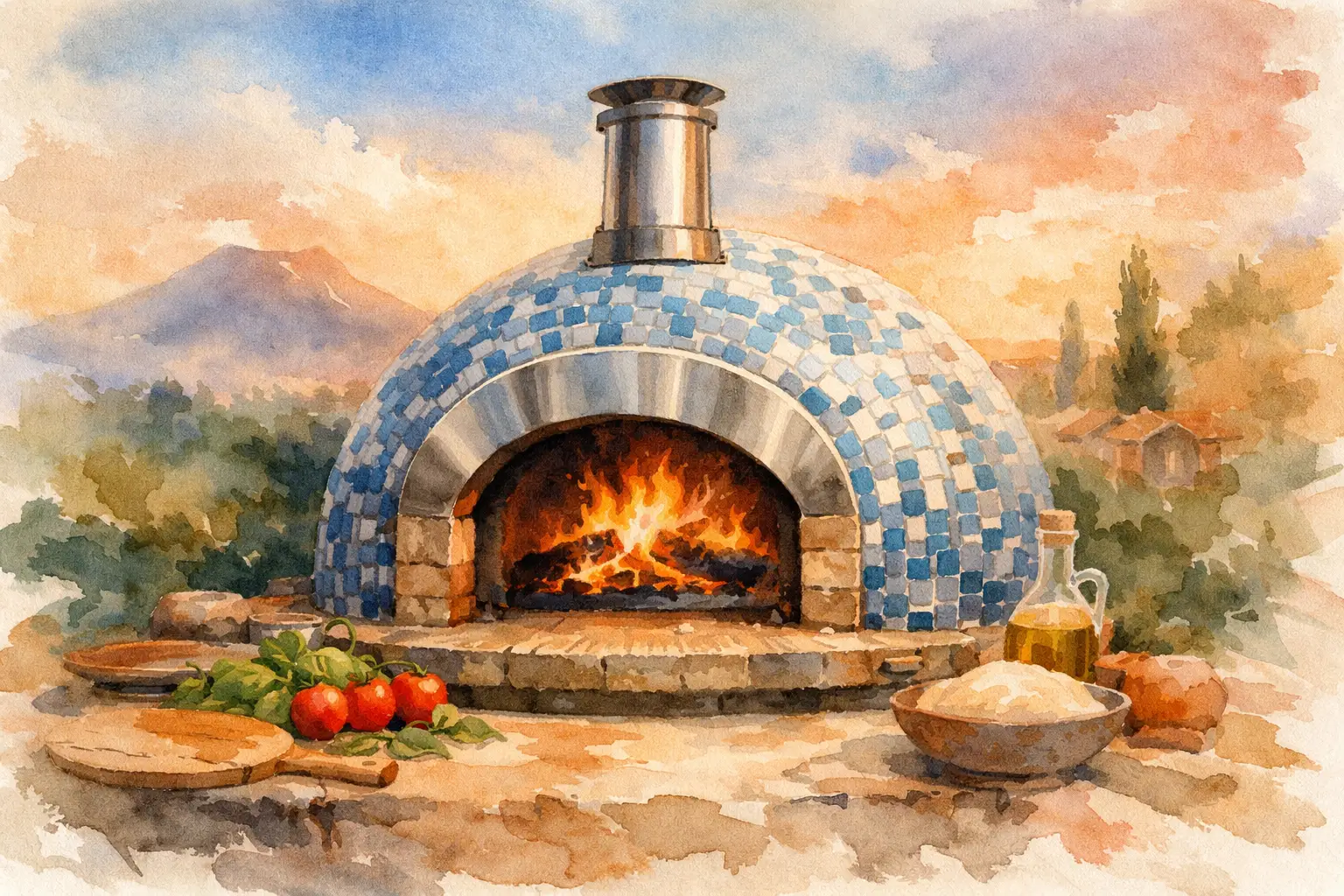
A luxury outdoor kitchen should not look like a row of appliances placed against a wall. A handcrafted pizza oven gives the space a focal point with scale, texture, and purpose. Its dome, tile work, finish, and faceplate can be selected to complement a coastal terrace, a contemporary pool deck, or a more traditional garden setting.
This is where custom construction matters. An oven can be designed around the footprint of the kitchen, the required landing space, nearby counters, and the visual language of the home. It can stand as a freestanding centerpiece or be integrated into a complete cooking wall with premium grilling and storage components. The result feels architectural because it is built as part of the environment, not added as an afterthought.
For luxury property owners, that permanence is meaningful. A real masonry oven carries a visual weight that portable or mass-produced equipment cannot replicate. It signals that the outdoor space was made for gathering, cooking, and staying awhile.
Durability Depends on What Is Behind the Finish
An attractive exterior is only as valuable as the oven beneath it. Outdoor ovens must withstand repeated heating cycles, seasonal exposure, and the stress of reaching high temperatures. Real firebrick, quality refractory materials, substantial insulation, and skilled masonry are the foundations of long-term performance.
The exterior finish still matters, particularly in humid or coastal environments where material selection and proper installation deserve careful attention. Yet buyers should look beyond tile color and decorative details. Ask what forms the cooking floor and dome, how the oven is insulated, how it is intended to be installed, and whether its size suits the way the household or business will actually cook.
A larger oven supports higher-volume entertaining and can provide more room for commercial production, but it also demands more fuel and a longer firing cycle. A smaller chamber heats more quickly and can be ideal for family meals, though it limits how many pizzas can be managed at once. The best oven is not the largest model. It is the one whose performance, footprint, and construction align with the setting.
A More Memorable Way to Host
The final benefit is difficult to measure but easy to recognize. Cooking around a live fire changes the pace of a gathering. Guests linger near the oven, children watch the flame, and each pizza arrives with a sense of occasion. The meal becomes participatory without becoming complicated.
For commercial operators, that same visibility can strengthen the guest experience. The sight of a real flame and the aroma of wood-fired cooking communicate craft before the first bite. In a restaurant, hospitality venue, or mobile concept, the oven can function as both a production tool and a statement of standards.
Forno Nardona builds this experience around authentic masonry performance and custom outdoor design, because an oven meant to last should cook beautifully and belong beautifully. Choose the chamber size, fuel configuration, and finish with care, then let the fire turn an ordinary dinner into the part of the night people remember.
Sorry, the comment form is closed at this time.