



21 Jul Premium Outdoor Cooking Island Guide for Entertaining
A serious outdoor kitchen is not a grill placed beside a counter. It is a permanent entertaining environment where fire, food, architecture, and conversation come together. We designed this premium outdoor cooking island guide for homeowners who want more than another patio appliance. The goal is a kitchen that cooks exceptionally, looks intentional from every sightline, and earns its place as a defining feature of the property.
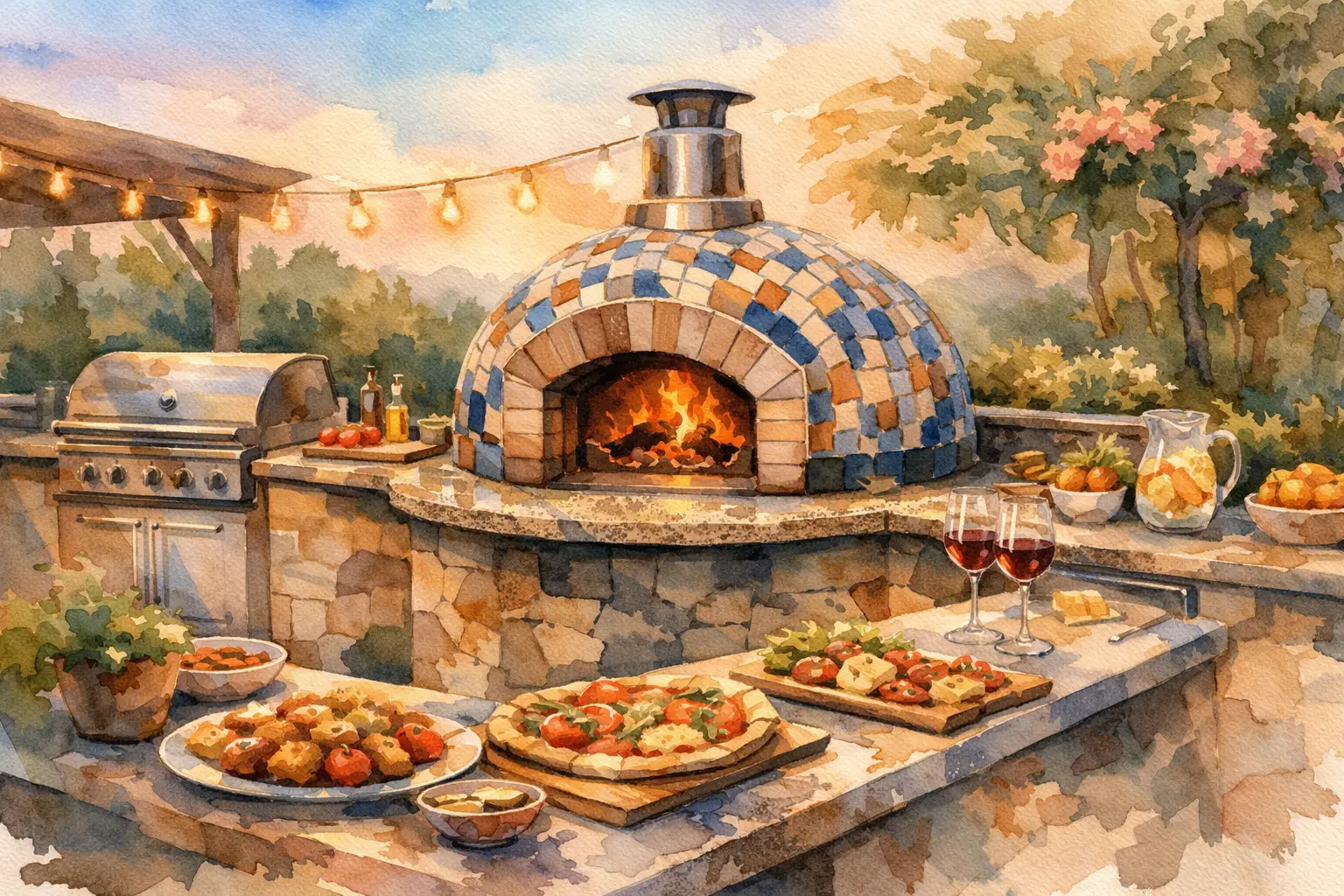
The difference begins with planning the island around how people actually gather. A wood-fired pizza oven creates a different rhythm than a conventional grill. It becomes the focal point, drawing guests close as pizzas, breads, roasted vegetables, and cast-iron dishes move through the fire. The island should support that experience rather than compete with it.
Start With the Cooking Experience
Before selecting stone, tile, or appliances, decide what the kitchen must do on a typical evening. A family that hosts pizza nights for ten people needs a different layout than a homeowner who wants an outdoor culinary centerpiece for larger celebrations. Workflows should determine the size of the right island, not simply the dimensions of the available patio.
A premium cooking island usually has three working zones: fire and heat, preparation, and serving. The oven and grill occupy the heat zone. A generous landing area beside each appliance gives the cook a secure place for peels, trays, and hot cookware. The preparation zone needs uninterrupted counter space for stretching dough, assembling ingredients, and plating food. Finally, a serving zone lets guests collect finished dishes without crossing directly through the cook’s path.
This separation matters when the oven reaches true pizza-making temperatures. A handcrafted firebrick oven offers the heat retention needed to produce crisp, leopard-spotted pizza, then transitions into roasting and baking long after the flame settles. That performance deserves adequate space around it. Crowding an oven into a narrow island might save a few feet, but it diminishes both safety and the pleasure of cooking.
Choose the Oven Before the Cabinetry
The oven should lead the design, especially when authentic wood-fired cooking is your priority. Builders often construct outdoor kitchens around modular appliances and later force an oven into the space. That approach frequently produces compromised counter heights, awkward clearances, and a visual mismatch between a substantial masonry oven and lightweight cabinetry.
Instead, select the oven type, footprint, fuel configuration, and finish first. A real firebrick oven carries visual weight and structural requirements that builders must address from the beginning. Its dome, landing, chimney, and finish act as architectural elements, not accessories. The surrounding island should frame those details with materials that feel equally deliberate.
For households that want the character of a live fire with greater scheduling flexibility, a hybrid wood-and-gas configuration makes a compelling choice. Wood delivers the aroma, ritual, and high-heat performance associated with traditional pizza. Gas simplifies startup when time is limited. Neither option is universally better. The right choice depends on whether the owner values a fully wood-fired process every time or wants a second fuel source for frequent weeknight use.
Forno Nardona designs ovens with this hierarchy in mind: the oven serves as the culinary and visual heart of the kitchen, built with real firebrick construction rather than treated as a decorative add-on.
Plan a Premium Outdoor Cooking Island Layout
Successful premium outdoor cooking islands offer enough room for the cook to work confidently while keeping guests comfortably involved. For patios where the oven needs its own commanding wall, an L-shaped design allows the grill, refrigeration, and prep counter to extend outward. If space is narrow, a straight island provides an elegant, efficient layout, particularly when you set the oven behind it as a focal point. Lastly, U-shaped arrangements offer the maximum work surface, though they require careful planning so the cook never feels enclosed.
Counter depth should comfortably support actual food preparation, not merely display. Long, continuous stretches of counter provide more value than several small fragments that appliances interrupt. Place a landing area on both sides of the oven when possible. One side can hold finished pizzas and cookware, while the other supports dough trays, wood, or tools.
Think about the guest side of the island as carefully as the cook side. Position bar seating where it does not force people to sit immediately beside a high-heat appliance or directly behind the preparation area. A slight offset gives guests a clear view of the fire while preserving the cook’s movement. In a luxury setting, this detail separates a space that merely looks good in photos from one that functions beautifully through an entire evening.
Build for Weather, Heat, and Permanence
Outdoor kitchens in coastal and warm-weather markets face demanding conditions: intense sun, rain, humidity, salt air, and repeated thermal change. Premium materials offer more than just aesthetics—they protect your investment and keep the island looking composed after years of use.
Select cabinetry, hardware, countertops, and appliance surrounds specifically rated for exterior exposure. Natural stone offers permanence and a distinctive surface, but some varieties require sealing and thoughtful care. Porcelain and sintered surfaces deliver strong stain and heat resistance with a more controlled appearance. Tile introduces color and artisan character, particularly around an oven facade, though grout selection and installation quality remain critical in wet climates.
Materials around the oven demand special attention. Heat clearances, noncombustible construction, proper insulation, and a correctly designed chimney system serve as foundational requirements. A luxury island should never conceal poor installation decisions behind beautiful finishes. The most impressive results combine refined materials with engineering that respects heat, weight, ventilation, and local building codes.
Do Not Underestimate Utilities and Storage
Treating infrastructure as an afterthought will quickly make even the most polished outdoor kitchen frustrating to use. Electrical service powers lighting, refrigeration, outlets, ignition systems, and sometimes ventilation. Water and drainage line installations benefit homeowners who entertain frequently, though a sink is not essential for every design. Plan gas lines early if your island includes a grill, side burner, or hybrid oven.
Storage deserves equal consideration. Outdoor-rated drawers near the prep zone keep tools, pans, and accessories within reach. A dedicated wood rack keeps fuel dry, orderly, and safely separated from direct heat during wood-fired cooking. Concealed waste and recycling bins keep cleanup discreet during events.
Lighting marks another hallmark of thoughtful design. Task lighting makes prep surfaces usable after sunset, while softer ambient lighting highlights the oven dome, stonework, and seating area. Avoid relying on a single bright overhead fixture. Layered lighting creates atmosphere without leaving the cook in shadow.
Make the Design Feel Belonging, Not Added On
A premium outdoor island should look as though it always belonged to the home. That does not mean every finish must match perfectly. Instead, align the scale, color palette, and material language with the existing architecture.
Mediterranean-inspired home often feature warm stucco, hand-finished tile, and an oven facade with an old-world facade. Meanwhile, contemporary property pairs better with clean masonry lines, restrained stone, and a sculptural oven finish. In either case, repeat one or two materials from the home or surrounding landscape. This creates continuity without making the outdoor kitchen feel like a cheap imitation of the interior.
Customization is where a statement kitchen becomes personal. Tile color, stone selection, engraved details, metal accents, and the profile of the oven face all shape the character of the finished space. Restraint often feels more luxurious than excess. One exceptional handcrafted element, framed by disciplined materials, creates a far greater impact than a collection of competing finishes.
Design for the Way You Entertain
The best island is not necessarily the largest one—it is the one that suits the host. If you treat cooking as a performance to share with guests, prioritize a broad oven landing, a visible flame, and seating positioned nearby. And if the kitchen must handle full outdoor meals, add refrigeration, a grill, ample prep space, and an adjacent dining connection. Or if you use the property seasonally or host larger gatherings, evaluate circulation paths from the house, pool, and seating areas before finalizing the footprint.
Leave visual breathing room around the island as well. A large masonry oven commands attention. Give it a proper backdrop, a clear approach, and enough surrounding space to let it read as architecture rather than equipment crowded onto a patio.
A well-designed outdoor cooking island changes how you host. Instead of disappearing inside to prepare the meal, you stay right at the fire, serving food with confidence and creating an unforgettable evening for your guests.
Sorry, the comment form is closed at this time.