



25 Jul An Outdoor Kitchen With Pizza Oven Guide for Entertaining
A pizza oven should not be treated as an accessory added after the patio is finished. It is the heat, visual weight, and social center of the space. This outdoor kitchen with pizza oven guide begins with that principle: plan around the oven first, then build every surrounding decision – from counter runs to seating – to support how you want to cook and host.
A well-designed outdoor kitchen creates a different kind of gathering. Guests can watch a live fire, smell the wood, and gather close while pizzas, roasted vegetables, seafood, and bread move from preparation counter to oven. Achieving that experience requires more than selecting an attractive oven facade. It requires the right footprint, materials, ventilation, utilities, and a masonry oven built to hold serious heat.
Start With the Oven, Not the Grill
Many outdoor kitchens begin with a grill and a long cabinet run, then attempt to fit an oven into the remaining space. That approach often leaves the oven undersized, visually disconnected, or inconvenient to use. A true wood-fired oven has physical and operational needs that deserve priority: a stable foundation, safe clearance from combustible materials, a chimney route, landing space at the entrance, and room for the cook to work comfortably.
First, decide what role the oven will play. If your goal is occasional pizza nights for a small family, a compact oven and focused prep zone may be ideal. If you host large dinners, use the oven for bread and roasting, or want a statement feature visible from the pool or main living area, plan for a larger cooking chamber and more generous service space.
The oven’s position should also support the flow of an actual cook. Ingredients need a nearby refrigerated prep area. Finished pizzas need a place to land. Wood needs dry, accessible storage without cluttering the entertaining zone. The cook needs a clear path that does not force guests to step behind the oven or cross in front of a hot opening.
Choose the right cooking capacity
Cooking floor size is more meaningful than an exterior dimension. The interior needs to accommodate the number of pizzas you expect to bake at once, while leaving room to turn and manage them near the fire. Larger ovens are also more versatile. They can handle a brisk catering pace, multiple dishes, cast-iron pans, and retained-heat cooking after the flames have settled.
The trade-off is straightforward: greater capacity requires more footprint, more structural support, and more thoughtful placement. It is worth it when the oven will anchor frequent entertaining. It is unnecessary when the space is primarily a quiet family patio. The right selection is not the biggest oven available. It is the oven that feels effortless at the scale of your hospitality.
Build an Outdoor Kitchen With a Pizza Oven Around Workflow
A beautiful kitchen can still feel frustrating if its work zones are scattered. The strongest layouts place preparation, fire cooking, finishing, and serving in a compact, logical sequence.
The most useful surface is the landing counter beside the oven opening. This is where peels rest, pizzas are dressed, hot pans are received, and finished food is cut. It should be broad enough for active cooking, made from a heat-tolerant material, and kept clear of decorative objects. Treat it as a working surface, not merely a ledge around the oven.
A grill, cooktop, or premium gas burner can complement a pizza oven rather than compete with it. The grill is useful for fast weeknight cooking, while the masonry oven brings high-heat pizza and slow retained-heat cooking. A sink and refrigeration zone belong close to prep counters, not on the far end of the island. When every element is within a few steps, the host stays engaged with guests instead of constantly moving across the patio.
For larger spaces, an L-shaped or U-shaped arrangement often provides the best separation between hot cooking and guest seating. In a tighter courtyard, a straight kitchen wall with the oven at one end can work beautifully, provided there is enough standing room in front of the opening. Avoid placing the oven directly across from a narrow island. You need room to maneuver a peel safely and comfortably.
Keep guests close, but outside the work zone
A pizza oven naturally attracts a crowd. Design for that instead of fighting it. Bar seating on the opposite side of an island gives guests a front-row view without placing them in the cook’s path. A dining table slightly beyond the kitchen keeps the atmosphere connected while allowing the oven area to remain functional.
For families and frequent hosts, consider sightlines as carefully as dimensions. The oven can face the pool, garden, lounge, or dining table, making the fire visible from where people spend time. At night, the glow of a real flame becomes part of the architecture.
Specify Materials That Match the Heat and the Setting
Outdoor kitchens in coastal and high-humidity climates need materials chosen for longevity, not only first-day appearance. Sun, rain, salt air, temperature swings, and cooking grease all test a finish. Masonry, stone, tile, powder-coated metal, and properly specified stainless components are durable choices when installed correctly.
The oven itself should be built around genuine refractory materials. Real firebrick and refractory mortar are designed to absorb, retain, and release heat in a way thin metal shells and lightweight inserts cannot replicate. That thermal mass is what creates the intense floor heat and stable dome environment associated with authentic Neapolitan-style pizza. It also extends the oven’s usefulness beyond pizza, allowing the chamber to carry heat into the next phase of cooking.
Exterior finishes should complement the home’s architecture rather than mimic a restaurant kitchen. Hand-finished stucco, natural stone, porcelain tile, and custom tile work can make the oven feel integrated with Mediterranean, transitional, contemporary, or coastal architecture. A carefully selected faceplate or engraved detail adds identity without becoming overly decorative.
Countertops deserve equally close attention. Dense natural stone, sintered surfaces, and outdoor-rated porcelain can deliver a refined look, but every material has care requirements. Some natural stones need sealing and may develop character over time. Porcelain offers excellent resistance to stains and sun exposure, but fabrication quality matters at edges and cutouts. Choose for the way you will use the kitchen, not only for a showroom sample.
Plan Structure, Ventilation, and Utilities Early
A masonry oven is a substantial architectural element. Its foundation must be engineered to support the full installed weight, including the oven, finish materials, chimney system, counters, and any surrounding structure. This is not a place for assumptions or a generic patio slab.
Ventilation is equally important. The chimney must be properly sized, routed, and terminated according to local requirements and the oven manufacturer’s specifications. If the oven sits under a roof, pergola, or covered lanai, clearance, hood design, and fire-safe construction become more complex. A covered installation can be striking and practical in Florida’s rain-heavy climate, but it must be designed as a complete system, not improvised after construction begins.
Wood storage, gas service for a hybrid oven or adjacent appliances, electrical outlets, drainage, and task lighting should be addressed before finishes are installed. Concealed utilities preserve the clean, architectural appearance luxury outdoor kitchens require. They also prevent the familiar problem of extension cords, exposed lines, and add-on fixtures undermining an otherwise exceptional build.
Wood-fired or hybrid fuel?
Wood-fired cooking offers the live-fire character, aroma, and ritual that many owners want from a pizza oven. It rewards technique and creates the visual drama guests remember. A hybrid wood-and-gas configuration may be the better choice for owners who want that authentic masonry cooking environment with faster startup or more predictable operation on busy evenings.
Neither choice is universally better. A dedicated wood-fired oven is ideal for people who value the full fire-building experience. Hybrid capability suits households that want flexibility without giving up the presence and performance of a true masonry oven. The decision should reflect your cooking habits, staffing needs for commercial use, and local fuel considerations.
Make the Oven an Architectural Statement
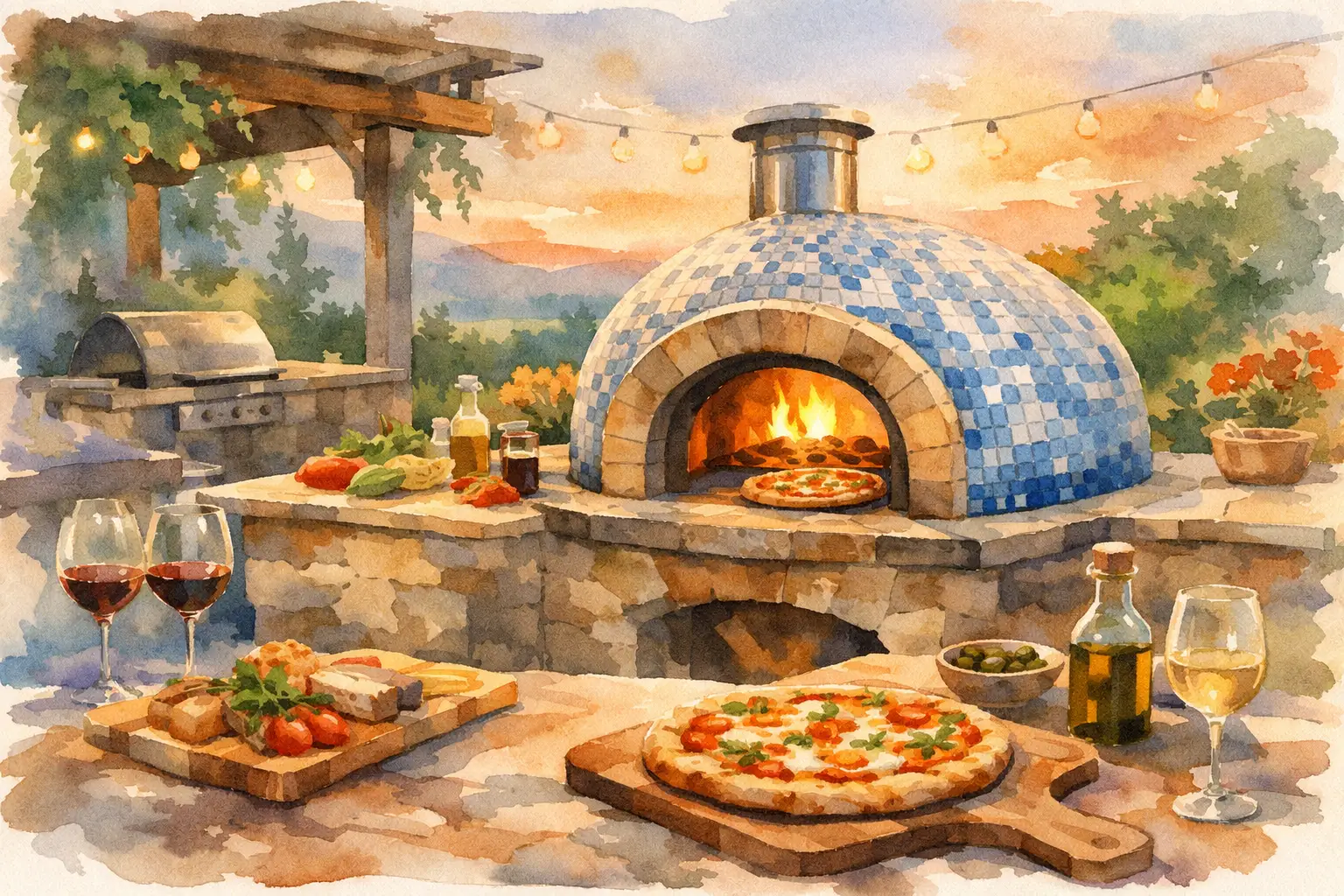
The finest outdoor kitchens do not look assembled from a row of appliances. They feel designed into the property. The oven gives the project its opportunity for permanence: a sculpted dome, a finished chimney, a tile field that catches the afternoon light, or a stone surround that echoes the home.
This is where custom craftsmanship changes the result. Forno Nardona builds ovens with real firebrick construction and artisan finishes because performance and presence should be inseparable. An oven that holds heat properly also earns the visual prominence it occupies.
Before approving a design, stand in the proposed location and picture a full evening. Picture the fire lit, dough on the counter, guests seated nearby, and the cook moving with a peel in hand. If the space supports that moment with ease, it will do far more than cook pizza. It will give your home a place people remember returning to.
Sorry, the comment form is closed at this time.