



17 Aug Pizza Oven Chimney Design That Performs Beautifully
A pizza oven chimney design is not a decorative afterthought placed on top of a finished dome. It is the working connection between the fire, the cook, and the outdoor living space around it. When it is proportioned correctly, smoke moves out with confidence, heat stays where it belongs, and the oven face remains a clean, inviting focal point. When it is treated as an afterthought, even a beautiful oven can become difficult to light, uncomfortable to stand beside, or visually out of scale with the architecture.
For a handcrafted masonry oven, chimney design deserves the same level of consideration as firebrick, insulation, dome geometry, and finish materials. The goal is not simply to create a taller stack. It is to create controlled draft while preserving the retained heat and authentic live-fire performance that make a true pizza oven exceptional.
Why Pizza Oven Chimney Design Begins at the Entry
In a traditional wood-fired pizza oven, the chimney does not rise from the center of the dome. It sits above the oven entry, just beyond the door opening. This placement is purposeful. The fire burns inside the chamber, while smoke and hot gases travel forward, collect at the upper portion of the entry, and rise through the vent and flue.
This arrangement allows the dome to retain heat rather than sending it directly up the chimney. A center-mounted chimney may sound intuitive, but it can pull heat away from the cooking chamber too aggressively and interfere with the oven’s thermal behavior. For high-heat pizza cooking, that retained energy is everything. It is what helps the floor recover between pizzas, gives the crust its leopard spotting, and lets a properly fired oven move from pizza to roasting, baking, and slow cooking.
The vent area above the entry is often called the throat. Its size and shape matter as much as the flue itself. Too narrow, and smoke can spill from the front of the oven during startup or when adding wood. Too large, and the chimney can draw excessive heat from the chamber. A well-built oven balances these forces so it drafts naturally without becoming wasteful.
Draft Is More Than Smoke Control
Draft is the upward movement of hot exhaust through the chimney. It is driven by the temperature difference between the hot gases inside the flue and the cooler air outside. A strong, stable draft clears smoke efficiently and supplies the fire with the oxygen it needs to burn cleanly.
But stronger is not always better. An oversized flue can create a fast-moving exhaust path that consumes fuel and makes temperature management less refined. An undersized flue can cause a lazy fire, smoke at the entry, and frustration during lighting. The right pizza oven chimney design supports a lively flame without turning the oven into a fireplace that constantly pulls heat forward.
This is why dimensions should be determined as part of the complete oven system. Oven chamber size, entry width and height, fuel type, installation location, and chimney run all influence the correct approach. A compact residential oven and a larger commercial oven do not have identical venting requirements, even when their outward style is similar.
Height, Location, and the Reality of Outdoor Conditions
Chimney height is where technical performance meets site-specific planning. A taller chimney generally creates more draft, but height alone does not solve every issue. The stack must also rise high enough to direct smoke away from people, nearby rooflines, seating areas, screened enclosures, and surrounding trees.
For an open-air backyard installation, the ideal height depends on the oven’s position within the kitchen and the conditions around it. A chimney that terminates too low can leave smoke hanging near a covered patio. A stack placed near a taller wall, roof, or pergola may encounter turbulent air that disrupts draft and pushes smoke back toward the cooking area.
Florida’s coastal winds make this especially relevant. An outdoor kitchen can be impeccably finished in stone, stucco, or tile, yet still need thoughtful chimney planning to perform gracefully on breezy evenings. Wind direction, roof elevations, and the intended entertaining zone should be considered before the enclosure is built, not after the first firing.
For indoor installations, the conversation becomes more exacting. The chimney must be planned around structural penetrations, clearances, approved materials, and local building requirements. Commercial installations may also require additional review based on occupancy, ventilation, and the oven’s use. This is not an area for generic assumptions. A premium oven deserves a venting system engineered for its setting.
Material Choices That Match a Masonry Oven
The chimney system should reflect the permanence of the oven beneath it. Real firebrick construction and substantial insulation are designed for repeated high-heat cycles, so the flue components must be rated and installed accordingly.
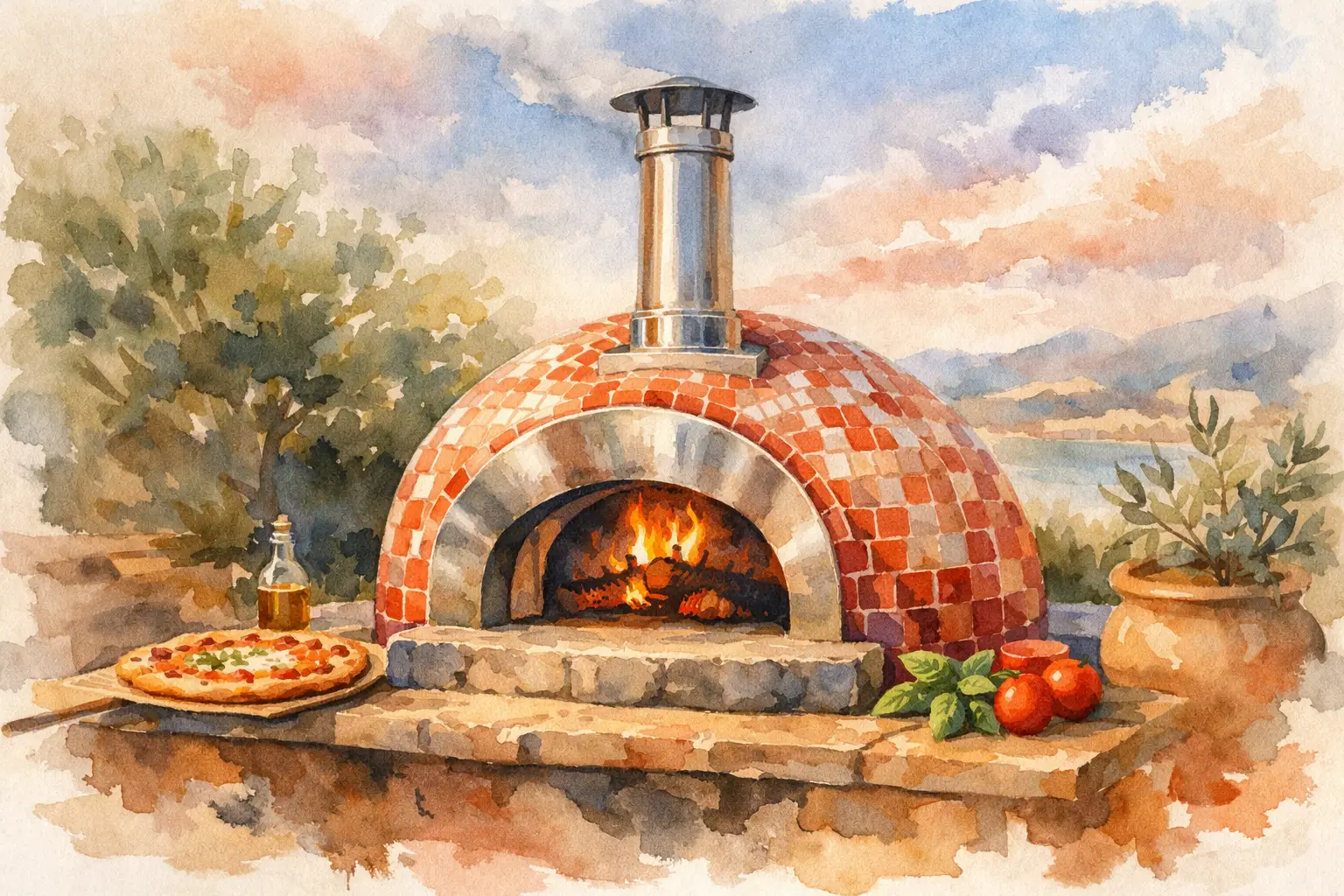
Stainless steel chimney systems are frequently used for exterior runs because they offer durability, clean lines, and practical weather resistance. In a luxury outdoor kitchen, they can be left visible for a crisp architectural statement or enclosed within a masonry chase that visually integrates with the oven facade. A wrapped chimney can be finished in matching stucco, stone, brick, or custom tile, allowing the stack to feel intentional rather than added on.
Masonry chimneys create a more traditional silhouette and can be particularly compelling when the oven is the centerpiece of a formal courtyard, pool terrace, or hospitality setting. They also add weight, complexity, and structural considerations. The choice depends on the design language of the property, the desired finish, and the route the chimney must take.
A chimney cap is equally practical. It helps limit rain intrusion, discourages nesting animals, and protects the top of the flue from debris. The cap must not restrict exhaust flow. Decorative accessories that look substantial but choke the outlet can compromise the very draft the chimney was built to create.
Designing the Chimney as Part of the Architecture
A luxury pizza oven should look composed from every angle. That means the chimney should relate to the oven’s scale, the counter heights, nearby appliances, and the home’s architecture. A very narrow exposed pipe on a substantial hand-built oven can appear undersized even if it technically functions. Conversely, an oversized masonry tower can overwhelm a compact cooking station.
Proportion is not merely aesthetic. A balanced facade helps frame the oven opening, draws attention to custom tile or an engraved faceplate, and gives the entire outdoor kitchen a sense of permanence. In a more contemporary project, a clean chimney chase may align with cabinetry and pergola posts. In a Mediterranean or Old World setting, a shaped masonry stack can extend the visual rhythm of arches, stonework, and textured finishes.
The best time to make these decisions is during the initial design consultation. By then, the team should know whether the oven will be wood-fired or hybrid wood-and-gas, whether it is freestanding or built into a full kitchen, and how the space will be used. A family that hosts relaxed weekend dinners has different priorities than a restaurant that needs reliable high-volume production, even though both benefit from authentic masonry performance.
Common Design Mistakes to Avoid
The most common mistake is selecting a flue size or chimney height by appearance alone. Visual proportion matters, but it cannot replace proper engineering. Another is placing the oven too close to an overhead structure without a clear chimney route and appropriate clearances.
Homeowners also sometimes assume a chimney will eliminate all smoke immediately. During startup, a cold flue needs time to warm and establish draft. Using dry, properly seasoned hardwood and building a controlled fire makes a noticeable difference. Once the oven and chimney are hot, a well-designed system should move smoke decisively upward rather than across the cook’s face or toward guests.
Finally, avoid concealing the chimney so completely that access for inspection or service becomes difficult. Luxury construction should be beautiful, but it should also respect the practical needs of a live-fire appliance built to serve for decades.
A Chimney Worth Building Around
The finest pizza oven chimney design is quiet in operation and confident in appearance. It clears the smoke, protects the heat, and gives the oven a finished architectural presence that feels earned rather than ornamental. When the fire is glowing, pizzas are moving across the hearth, and guests gather around the kitchen, that careful planning becomes part of the experience – felt in the comfort of the space and seen in every lasting detail.
Forno Nardona approaches chimney planning as part of the oven’s craftsmanship, not an accessory added after the masonry is complete. The right design allows a hand-built oven to perform with the authority and beauty its setting deserves.
Sorry, the comment form is closed at this time.