


31 Oct Cost of Takeout vs Home Pizza, Compared
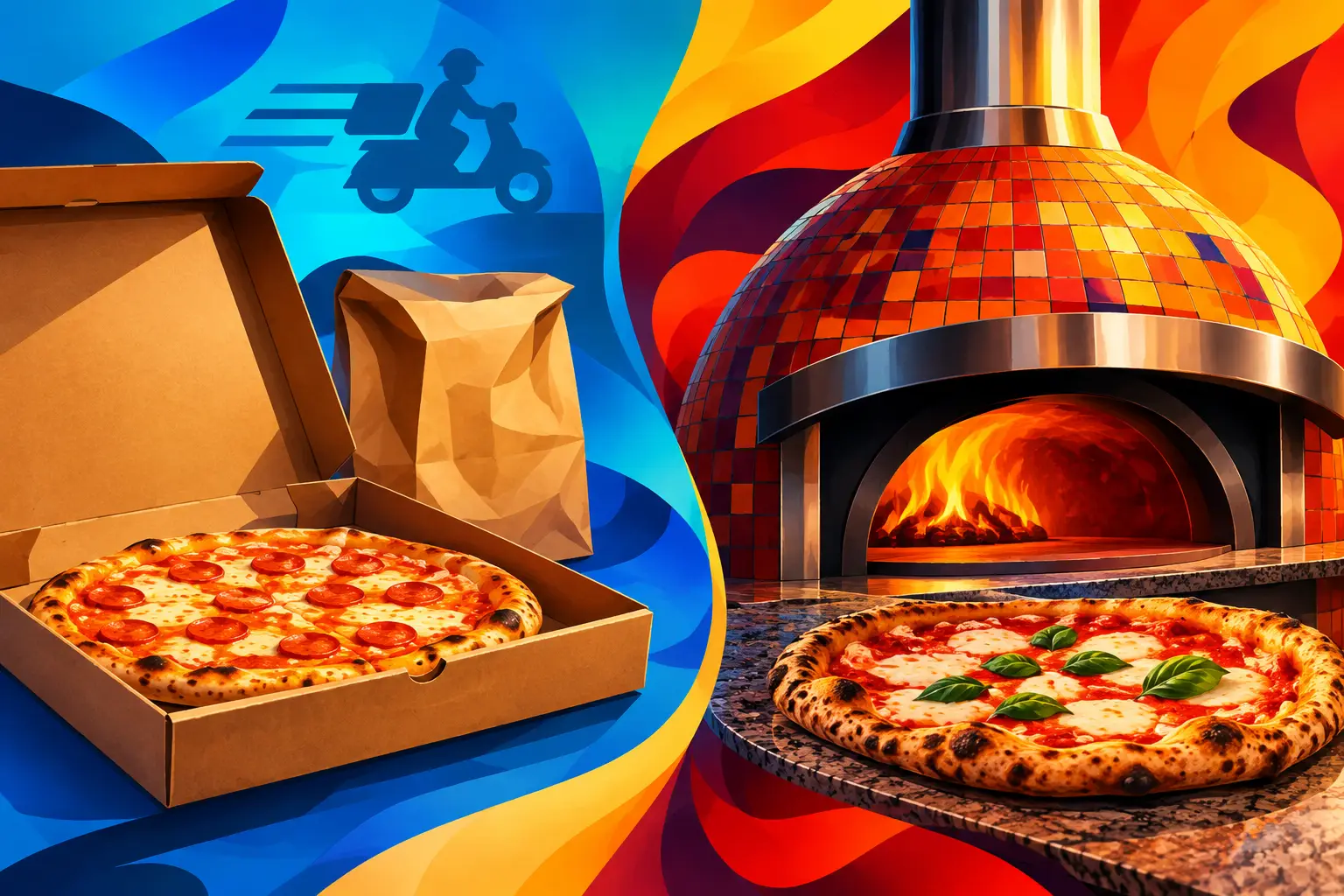
A Friday-night pizza order can feel like the easy choice until the total lands on the screen and the box arrives lukewarm. The cost of takeout vs home pizza is not simply a matter of what appears on a receipt. It is a question of frequency, ingredient standards, hosting habits, and whether your outdoor kitchen is designed for occasional convenience or memorable meals made around real fire.
For homeowners who entertain, pizza is more than a menu item. It is one of the rare meals that keeps guests gathered outside, gives everyone a role, and moves at the pace of the party. A properly built wood-fired oven turns that experience into a lasting part of the property rather than another delivery transaction.
Cost of Takeout vs Home Pizza: Look Beyond the Order Total
Takeout has obvious appeal: no dough to stretch, no fire to manage, and no cleanup beyond recycling a box. But its true cost compounds through service charges, delivery fees, gratuity, add-ons, and the tendency to order more food than the table actually needs. For a household that orders pizza routinely, convenience becomes an expensive habit precisely because each meal is treated as a one-time purchase.
Home pizza shifts the equation. The first few meals require planning, and there is a learning curve if you want a properly blistered crust rather than a pale imitation of restaurant pizza. Once the routine is established, however, the ingredients are straightforward and controllable. Dough, sauce, cheese, and toppings can be purchased for the number of people eating, with leftovers planned rather than accidental.
The distinction matters most when you care about quality. Takeout places you at the mercy of another kitchen’s ingredient choices, timing, and delivery radius. At home, you decide whether the mozzarella is fresh, whether the sauce is simple and bright, and whether the crust gets the char and leopard spotting that only high heat can produce.
There is one important exception: if pizza is a rare, solitary meal and you have no interest in preparing food or entertaining, takeout may remain the more sensible choice. A serious oven is not meant to justify itself through one quiet weeknight. It earns its place through repeated use, better cooking, and the experience it creates over years.
What Home Pizza Actually Requires
A fair comparison includes more than flour and cheese. Home pizza requires fuel, prep time, a work surface, tools, cleanup, and an oven capable of reaching and holding the right temperature. Those requirements are not drawbacks when the kitchen has been designed with intention, but they should be recognized.
A quick meal in a conventional indoor oven can produce a satisfying pizza, especially for a family dinner. It does not reproduce the heat behavior of a true masonry oven. Neapolitan-style pizza depends on intense radiant heat from the dome, heat stored in the firebrick floor, and a live flame that finishes the top as the base crisps. That is why a handcrafted wood-fired oven is a culinary instrument, not simply an outdoor appliance with a pizza setting.
A quality installation also changes the workflow. A dedicated prep area allows the host to organize dough, toppings, peels, and finished pies without carrying trays in and out of the house. Storage keeps essentials close at hand. Integrated grilling and refrigeration can turn pizza night into a complete outdoor meal rather than a narrow cooking project.
For this reason, the cost of home pizza should be assessed at two levels: the recurring cost of each meal and the long-term value of the space where those meals happen. Ingredients and fuel are the recurring portion. The oven and kitchen are a durable investment in the home, its entertaining capacity, and its visual character.
The Difference Real Firebrick Makes
Not every pizza oven delivers the same return in use. Thin metal units can heat quickly, but they lose temperature quickly as well. That may be acceptable for a fast dinner, yet it becomes limiting when guests are waiting and several pizzas must be cooked back-to-back.
Real firebrick provides thermal mass. Once fully heated, it stores energy in the dome and cooking floor, recovering between pizzas and supporting a consistent bake. The result is more than speed. It is control: a crisp base, properly melted cheese, and a crust with the texture that makes people reach for another slice.
That performance also expands what the oven can do after pizza. Roasted vegetables, seafood, breads, cast-iron dishes, and slow-cooked meats make fuller use of retained heat. A well-made oven is not a single-purpose novelty that disappears after the first season. It becomes a centerpiece for outdoor cooking across the calendar.
Where Takeout Still Has an Advantage
Takeout wins when time is truly scarce. If you are arriving home late, hosting no one, and need food without setup or cleanup, delivery solves a real problem. It also avoids the effort of maintaining a fire and learning the rhythm of launching, turning, and finishing pizzas.
But convenience is not always the same as value. Delivery can be late. Pizza can cool in transit. A favorite restaurant can change its recipe or vary from one night to the next. At home, the process is yours to refine. After a handful of cooks, dough management and firing the oven become part of the pleasure, not an obstacle to it.
Hybrid wood-and-gas configurations can be particularly practical for homeowners who want authentic wood-fired capability along with greater flexibility for a faster midweek cook. The right choice depends on how you cook, local installation requirements, and whether the oven is intended to anchor a larger outdoor kitchen.
The Entertaining Value That Does Not Fit on a Receipt
A delivered pizza arrives finished. A wood-fired pizza oven creates a performance. Guests notice the flame, the craftsmanship of the masonry, and the aroma before the first pie leaves the oven. Children can choose toppings. Friends can gather around the prep counter. The host remains part of the evening instead of disappearing into an indoor kitchen.
This is where a custom oven changes the comparison most dramatically. An architecturally considered oven can complement stonework, tile, pool areas, and covered patios while giving the backyard a clear focal point. Custom tile colors, a distinctive faceplate, and a thoughtfully proportioned surround allow the oven to belong to the home rather than look added on after the fact.
Forno Nardona builds with this larger purpose in mind: authentic cooking performance, substantial masonry construction, and a finish worthy of a luxury outdoor living environment. The point is not to make every pizza night feel complicated. It is to make it feel like an occasion without leaving home.
How to Make Home Pizza Worth the Effort
Start with a repeatable approach rather than an overly ambitious menu. Prepare dough ahead of time, keep early toppings restrained, and give the oven adequate time to heat thoroughly. A well-fired oven rewards simplicity: quality dough, restrained sauce, good cheese, and careful attention during the brief bake.
When hosting, make pizzas in a natural sequence. Begin with familiar combinations for hungry guests, then use later pies for seasonal vegetables, spicy toppings, or a simple dessert pizza. Keep the gathering casual. The best outdoor pizza nights are not formal demonstrations of technique. They are generous, relaxed meals with a reason to stay outside.
The smartest comparison is not whether one pie costs less than another on a single night. It is whether your home can offer the food, atmosphere, and permanence you want to return to. Build the space around that answer, and every fire becomes more than a meal.
No Comments