

15 Jun 8 Top Commercial Pizza Oven Features
A busy service exposes weak equipment fast. If an oven loses heat after a few pies, recovers slowly, or looks tired in front of guests, it stops being a tool and starts becoming a liability. That is why the top commercial pizza oven features are not just about cooking performance. They shape ticket times, consistency, labor flow, fuel use, and the impression your kitchen makes on every customer who sees it.
For restaurant operators, hospitality groups, caterers, and food truck owners, the right oven is part production engine and part centerpiece. The best commercial ovens do more than reach high temperatures. They hold heat with authority, bake evenly under pressure, and stand up to years of demanding use while still presenting the kind of craftsmanship that elevates the entire concept.
Top commercial pizza oven features that matter most
When buyers compare ovens, the conversation often starts with fuel type or footprint. Those details matter, but they are only part of the story. The strongest commercial ovens are defined by how they are built, how they perform over a full shift, and how well they fit the brand experience you are trying to create.
1. Real thermal mass and true heat retention
The first feature worth serious attention is thermal mass. A commercial pizza oven should not just get hot quickly. It should absorb heat into real masonry or dense firebrick and hold that heat through repeated opening, loading, and turning.
This is where construction quality separates premium ovens from lighter, mass-produced alternatives. Real firebrick floors and dome structures create the deep, stored heat that gives pizza proper bottom char, balanced top bake, and consistent recovery between orders. If your menu depends on volume and authenticity, strong heat retention is not a luxury feature. It is foundational.
There is a trade-off, of course. Greater thermal mass usually means more weight, a longer initial heat-up, and more planning around installation. But for many commercial settings, especially restaurants and hospitality venues, the payoff in performance is substantial.
2. High-temperature capability with controlled baking
Many operators ask one simple question first: how hot does it get? That matters, but temperature alone is not enough. A premium commercial oven should be able to reach true pizza temperatures while still allowing controlled baking across different products.
Neapolitan-style pizza demands intense heat. Roman-style pies, roasted proteins, vegetables, and baked pasta often call for a different rhythm. The best ovens give you range, not just peak numbers. You want an oven that can produce a fast, blistered crust when needed and still remain manageable for broader menu execution.
That flexibility becomes especially valuable in mixed-service environments such as upscale bars, boutique hotels, and outdoor hospitality spaces, where the oven may support more than a single pizza style.
3. Even heat distribution across the chamber
An oven can be beautiful and still underperform if the heat pattern is erratic. One of the top commercial pizza oven features is balanced heat distribution from floor to dome and from one side of the chamber to the other.
In practice, this means fewer hot spots that scorch one pie while underbaking the next. It means more predictable turning, cleaner pacing during service, and less dependence on a single highly experienced operator to compensate for flaws. A well-designed chamber creates a more stable cooking environment, which protects food quality and improves labor efficiency.
This matters even more in high-visibility kitchens, where every movement is part of the guest experience. A chef should be managing craft, not fighting the oven.
4. Fuel flexibility that matches your operation
Wood-fired ovens remain the standard for live-fire character, aroma, and presentation. They create an experience that customers recognize immediately, and in many concepts that sensory appeal is part of the sale. But commercial buyers should also weigh whether a hybrid configuration makes more sense.
Wood-and-gas ovens give operators greater control over startup, recovery, and service continuity. In some kitchens, that flexibility is a major advantage. You can maintain authentic live-fire cooking while reducing some of the variability that comes with wood alone.
The right choice depends on your concept, local code requirements, labor model, and menu. A chef-driven restaurant may prefer the ritual and flavor profile of a traditional wood-fired oven. A hospitality group or high-output venue may prioritize hybrid performance for its added control. Neither choice is automatically better. The best one is the one that supports your service model without compromising the product.
Build quality is one of the top commercial pizza oven features buyers overlook
Commercial buyers sometimes focus so heavily on output that they ignore how the oven is made. That can be costly. The materials and craftsmanship behind the oven will affect not just longevity, but also heat retention, maintenance needs, and visual impact.
5. Real firebrick and masonry construction
There is a meaningful difference between an oven built with authentic firebrick and one dressed up to look traditional. Real masonry construction delivers the density, durability, and thermal behavior that serious pizza programs need.
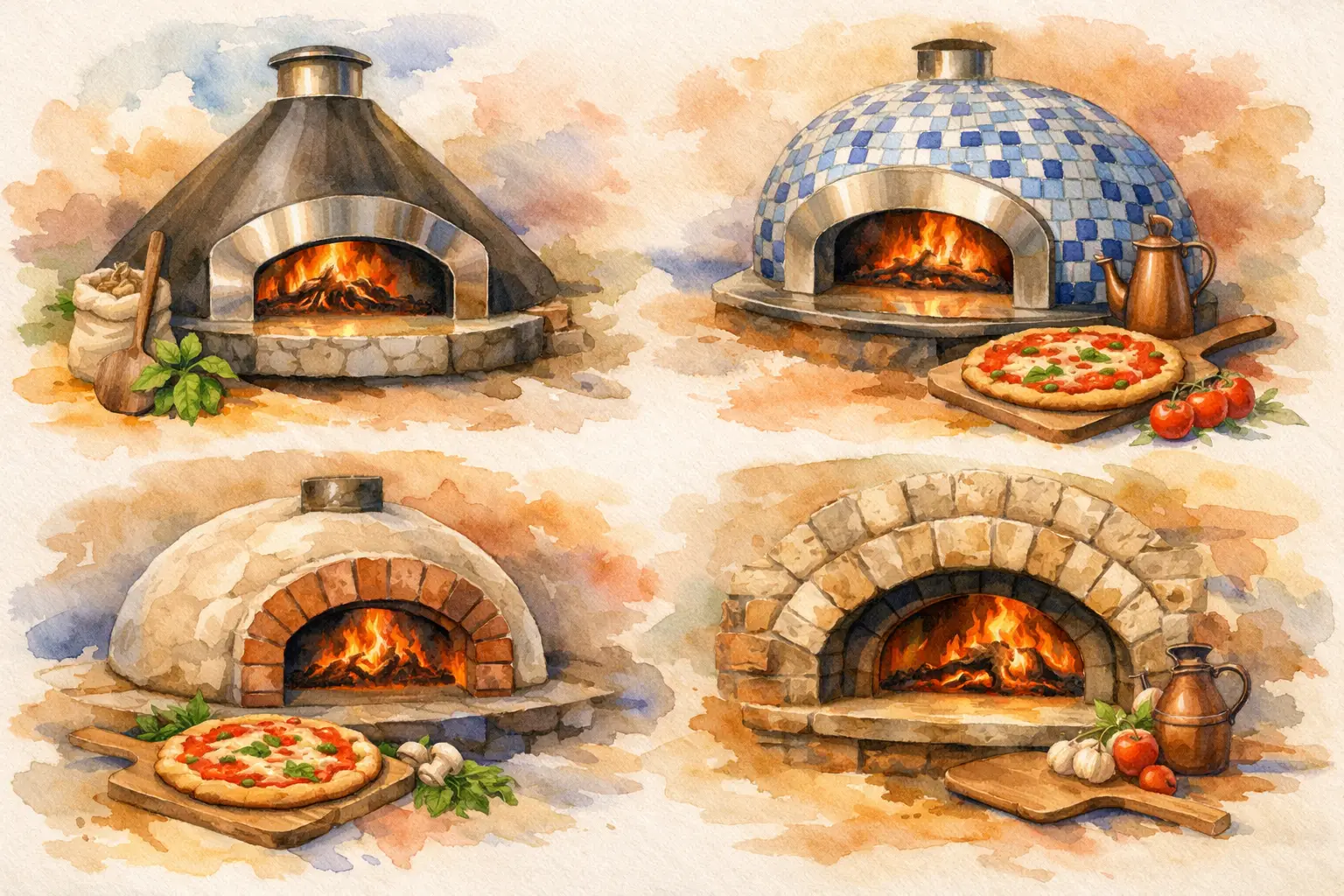
It also changes the feel of ownership. A handcrafted brick oven has permanence. It belongs in a refined restaurant, a luxury outdoor venue, or a hospitality setting where design matters as much as output. That visual authority is difficult to replicate with lighter fabricated units.
For operators building a premium concept, the oven should reinforce the quality of the entire space. It should look intentional, architectural, and substantial.
6. Insulation that protects performance and efficiency
Heat retention is not only about brick thickness. Insulation plays a major role in how efficiently an oven performs and how well it maintains stable cooking temperatures.
A properly insulated commercial oven loses less heat to the surrounding environment, recovers faster, and places less strain on fuel use over time. In warm climates like Florida, where outdoor and semi-outdoor installations are common, insulation also helps maintain more predictable internal conditions despite ambient heat and humidity.
Poor insulation can make an oven feel inconsistent and expensive to operate. Strong insulation supports both performance and long-term value.
7. Interior capacity and usable cooking floor
Bigger is not always better, but cramped capacity is a mistake many operators regret. A commercial oven should have enough usable floor space for your real service demands, not just your opening-week projections.
The key word is usable. Chamber shape, landing depth, door opening, and floor layout all affect how efficiently a cook can work. An oven may look large on paper and still feel restrictive during service. The right design gives your team room to launch, turn, and retrieve pizzas with control.
For food trucks and tighter kitchens, space planning becomes even more critical. Compact ovens can perform beautifully, but only when the interior is thoughtfully proportioned and matched to the workflow.
8. Architectural presence and customization
In premium commercial environments, the oven is often visible to guests. That changes the buying criteria. You are not simply purchasing equipment. You are investing in a visual statement that can define the room.
A handcrafted oven with custom finishes, tailored dimensions, and refined detailing brings more than utility. It adds identity. In luxury hospitality, open-kitchen restaurants, and upscale outdoor venues, the oven often becomes the focal point that anchors the entire concept.
That is one reason custom-built solutions matter. A generic unit may cook adequately, but it rarely contributes to the architecture of the space. A bespoke oven can be designed to align with materials, colors, and service goals from the start. For brands that trade on atmosphere and authenticity, that difference is significant.
Choosing features based on your concept
The best buying decision starts with operational honesty. If your menu centers on traditional wood-fired pizza and visible craftsmanship, prioritize masonry build, thermal mass, and presentation. If you need flexibility across multiple dayparts or more controlled startup and recovery, hybrid fuel capability may deserve more weight.
Or if you operate in hospitality or luxury residential-commercial crossover spaces, appearance should not be treated as secondary. Guests notice the oven. They photograph it. They associate it with the quality of the food before the first slice hits the table.
This is where a premium manufacturer such as Forno Nardona stands apart. The value is not only in high-heat performance, but in real brick construction, artisan production, and the ability to create an oven that performs like a serious commercial asset while presenting like a permanent architectural feature.
Buying a commercial pizza oven is not about chasing the longest feature sheet. It is about selecting the features that protect your product, support your staff, and strengthen the experience your business sells every day. Choose the oven that still feels right after the rush, after the install, and years after the first fire.
Sorry, the comment form is closed at this time.