

07 Aug What Oven Floor Material Makes Better Pizza?
What Oven Floor Material Makes Better Pizza?
A pizza oven can feature a beautiful arch, an impressive flame, and a stylish outdoor setting. However, it still produces pale bottoms or burned centers if the cooking deck fails. Homeowners and chefs often ask what oven floor material makes better pizza. The answer is not a thin steel plate or a generic stone. For authentic wood-fired performance, a properly built firebrick floor remains the standard.
The floor is where the transformation happens. It delivers conductive heat that sets the crust and creates classic leopard spotting. This heat gives each pie enough structure to lift cleanly from the peel. Therefore, its material, thickness, installation, and heat retention determine whether an oven produces exceptional pizza consistently.
Why the Oven Floor Matters More Than Most People Expect
Flames and dome radiant energy heat the top of a pizza. Meanwhile, the floor cooks the bottom through direct contact. Consequently, these forces must work together seamlessly.
If the deck is too cool, the toppings finish before the base develops crispness. Conversely, if it is too hot, the bottom chars before the rim rises fully. A quality pizza floor absorbs heat during firing, releases it evenly, and recovers quickly between pizzas.
This balance becomes especially important when entertaining guests. A serious oven should not lose momentum after cooking one excellent pie. Furthermore, stable deck heat allows the cook to work with total confidence during busy services.
Firebrick: The Best Oven Floor Material for Pizza
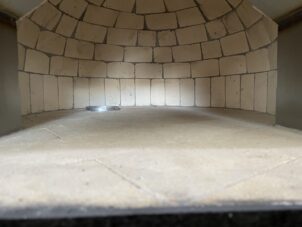
Dense, high-quality firebrick is the preferred floor material for traditional pizza ovens. It delivers thermal mass, controlled conductivity, durability, and a naturally food-safe cooking surface.
Firebrick stores a substantial amount of energy as the oven heats. Once the deck reaches cooking temperature, it transfers energy directly into the dough. This action creates a crisp, blistered underside without acting as an aggressive hot plate. As a result, you get a browned crust that stays airy rather than dried out.
In addition, a true firebrick deck easily handles the realities of wood-fired cooking. It tolerates repeated high-heat cycles, live fire contact, and natural thermal movement. When properly installed, individual bricks expand naturally without forcing stress into the cooking floor.
The brick joints matter as well. A carefully fitted deck provides a smooth surface for launching and turning pizzas. Thus, authentic brick ovens continue to perform reliably for decades.
Not All Firebrick Is the Same
The word “firebrick” can describe many different products in today’s market. Some options are lightweight insulating bricks intended solely to hold heat inside an oven wall. In contrast, dense refractory firebricks handle direct exposure to high temperatures and heavy tools.
For baking pizza, the deck must use dense refractory firebrick. Insulating firebrick is too soft for a floor and wears down under peels. Furthermore, it fails to provide the right heat transfer characteristics. A premium oven uses insulation beneath the dense brick deck, directing stored heat toward your food.
Cast Refractory Floors: Capable, but Dependent on the Build
A cast refractory floor can make excellent pizza when formulated correctly. Refractory castables withstand heat well, and a monolithic floor eliminates brick joints. Therefore, they remain a legitimate choice in commercial applications.
However, performance depends heavily on the specific refractory mix, thickness, curing process, and reinforcement. A poorly selected cast floor may heat unevenly or develop cracks. It also lacks the easy serviceability of individual firebricks. If a brick breaks, a mason can replace it easily. Conversely, repairing a cast deck requires far more work.
For a custom luxury oven, a real firebrick floor offers a more proven choice. It provides a simple material history: dense brick above quality insulation, built to hold and deliver heat.
Cordierite Stone: Useful for Home Baking, Limited for True Pizza Ovens
Cordierite baking stones are common in conventional kitchens and compact appliances. They resist thermal shock better than ceramic stones and improve pizza quality compared to metal pans.
Still, cordierite cannot match a thick masonry firebrick deck. Many cordierite stones are thin, meaning they hold less energy and recover slowly. That lag becomes limiting when cooking multiple pies for guests at high temperatures.
Cordierite functions as a practical accessory in smaller portable units. However, it is not the material that defines a serious wood-fired oven. A built-in masonry deck provides far more mass and stability.
Steel Floors and Inserts: Fast Heat, Little Forgiveness
Steel transfers heat exceptionally quickly. However, that rapid transfer creates major risks when fresh pizza dough hits the surface. In a wood-fired environment, steel burns the base before the upper crust chars properly.
Steel has a useful place in lower-temperature indoor kitchen ovens. Nevertheless, it is not the ideal permanent deck material for a traditional pizza oven. It offers raw speed rather than measured, forgiving heat.
Additionally, a steel insert changes how an oven behaves during a long cooking session. It heats rapidly but cools down instantly when loaded with food. Therefore, this high variability disadvantages cooks who pursue authentic results.
Soapstone, Tile, and Other Decorative Surfaces
Soapstone features notable thermal properties and works in certain specialized applications. However, it is not the traditional choice for a high-output pizza deck. Its behavior varies widely by thickness and composition.
Similarly, ceramic tile, porcelain tile, and decorative stone should never form a pizza floor. They look refined in an outdoor kitchen, but cannot withstand direct flame or sudden temperature swings. Glazes craze, surfaces crack, and materials may contaminate food.
In a luxury outdoor kitchen, choose the oven floor for performance first. Architectural finishes can frame the exterior nicely, but the deck itself must remain a purpose-built cooking surface.
What Oven Floor Material Makes Better Pizza for Your Cooking Style?
For classic Neapolitan-style pizza, dense firebrick is the clear winner. It supports intense dome heat, rapid bake times, and balanced bottom char. The floor must remain thick and backed by heavy insulation.
For New York-style, artisan, and longer-baked pizzas, firebrick remains highly effective. Its gradual heat transfer gives the cook total control as bake times extend. Moreover, the same floor handles breads, roasted vegetables, seafood, and cast-iron cooking.
Commercial operators must pay close attention to heat recovery times. A restaurant oven bakes continuously during peak service, requiring a balanced floor system. The right material alone cannot compensate for an undersized or poorly insulated chamber.
The Floor Is a System, Not a Single Material
Even the best firebrick underperforms if it sits directly on a cold concrete slab. Heat migrates downward instead of staying in the deck. Likewise, a thick brick floor fails if the oven dome lacks proper proportions.
A well-built oven uses dense firebrick on the floor and high-performance insulation underneath. This creates a deep thermal reserve that separates true wood-fired ovens from decorative shells.
Finally, proper firing habits matter immensely. Let the oven saturate completely with heat before cooking your first pie. Brush away excess ash before launching dough to keep the cooking surface clean.
Forno Nardona builds ovens around this core principle: the floor is a real firebrick cooking deck within a handcrafted masonry system. Choose the deck you want beneath your hundredth pizza of the evening. A dense firebrick floor rewards that smart decision every single time.
Sorry, the comment form is closed at this time.